
New IP-driven business models in biotech 🎯 IP Management Pulse #51

Subscribe for compact, in-depth IP intelligence: trends, cases, and research curated by the team of the IP Business Academy and the IPBA Connect Platform. Get practical playbooks for positioning, LinkedIn, and business development. Learn from leading experts in the context of business models and R&D. Join the IPBA Connect community and turn IP knowledge into results — with dIPlex, live formats, IPBA Connect, and white papers as your launchpad.
Here you can find the latest issues in the archive and also subscribe. A fresh read with all important IP Management content will be sent to the subscribers every second Thursday at 7:00 (CET), so that they can start the day informed.
The next newsletter will cover the following topics:
New IP-driven business models in biotech
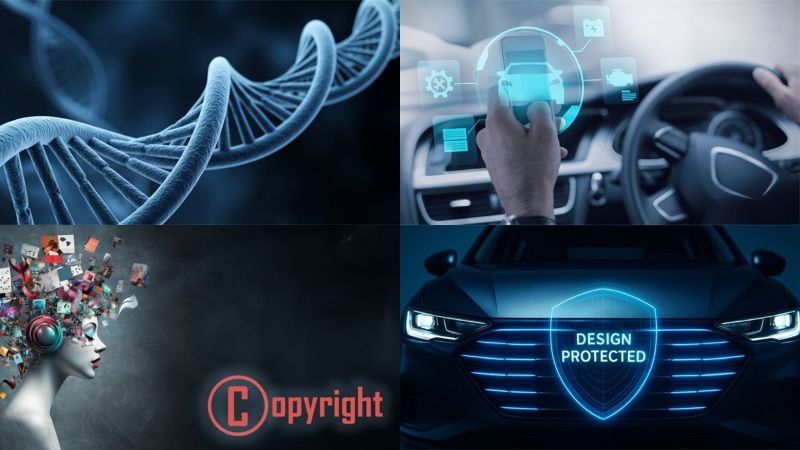
XOMA Royalty Corporation introduced a new IP-driven business model in biotech, moving away from drug development toward royalty aggregation. Instead of commercializing drug candidates itself, XOMA acquires economic rights to royalties derived from sales of patented drugs of their pharma and biotech partners. It offers non-dilutive, non-recourse capital in return for these rights and builds a broad portfolio across multiple assets, indications and trial stages. Revenue is generated when milestones are achieved and products reach commercialization. This approach spreads technical and clinical risk while turning IP-backed royalty revenues into a scalable, financing-driven biotech business model.
Licensing of copyright protected characters
OpenAI and The Walt Disney Company entered into a licensing agreement allowing OpenAI to use Disney’s copyright protected characters and creative assets within Sora, OpenAI’s video generation model. The agreement addresses long-standing copyright concerns around AI-generated characters by moving from unlicensed generation to a mutual framework. Finally, Disney gains a secure way to explore generative AI for storytelling and content creation, while OpenAI receives lawful access to iconic IP that users frequently reference. The deal marks a shift from litigation to negotiated collaboration between AI developers and major IP rights holders.
SEP licensing models in the automotive industry
OPPO and Audi concluded a licensing agreement under which OPPO licenses its cellular standard essential patents (SEPs) to Audi for use in connected vehicles. The deal covers key mobile communication standards, enabling Audi to implement connectivity features without litigation risks. It reflects a shift in the automotive sector toward negotiated, FRAND-based SEP licenses rather than legal enforcement. For OPPO, the agreement monetizes its telecom patent portfolio beyond smartphones; for Audi, it secures legal certainty and uninterrupted access to standardized technologies essential for modern vehicles. The agreement signals increasing maturity in automotive SEP licensing structures.
Steady worldwide growth in design applications
The WIPO World Intellectual Property Indicators 2025 report shows that industrial design activity continued to grow in 2024, with design applications rising by around 2.6 % to an estimated 1.22 million globally. India, the United States and the European Union all recorded a notable surge, but China remained the major contributor to total design filings worldwide. Around one third of all design applications filed at foreign IP offices were from Chinese applicants, while Korea showed the highest filing activity per capita. Only five industry sectors were responsible for close to 63 % of all design applications, showing the industry differences in design protection.
Resource Hub: The Email Course Business Development
The Email Course “Business Development for IP Experts” shows IP professionals how to turn expertise into mandates through clear positioning, trust-based communication and practical, low effort actions. It explains business development in an IP-specific way, without sales pressure or generic marketing tactics.
Communicating complexity simply: making expertise accessible without losing credibility

The article explains why many IP experts remain underutilized despite strong expertise: they communicate their knowledge often in ways that are not decision-relevant. In fast moving, multi-stakeholder environments, expertise must be translated from technical language into clear business opportunities and risks. Communicating complexity simply is not about reducing depth, but about making expertise usable. Experts who focus on relevance and business outcomes are trusted earlier and invited into decision-making processes. This ability to translate rather than broadcast builds authority, strengthens personal branding, and allows expertise to scale through trust, clarity, and shareability.
Simone Frattasi – Rewiring IP Management for a Decarbonising Shipping and Logistics World

Simone Frattasi, Head of Global IP at Maersk, is featured in this article for leading transformative IP management in the shipping and logistics sector, an industry under intense pressure to decarbonise. He has integrated IP into Maersk’s business strategy, aligning patents, trademarks and IP risk management processes with innovation and sustainability goals. Under his leadership, Maersk co-founded the ESG Smart Pool, a collaborative patent pool for energy transition technologies, and helped launch the IP Charter for Energy Transition (IP4ET) to educate and coordinate climate-related IP practices. Frattasi also fosters knowledge sharing through the Nordic IP Day and contributes to the patent portfolio management best practice.
IP Licensing: Tax, Compliance, and Global Regulations
 This podcast episode examines IP licensing as a multidisciplinary challenge requiring integrated legal, financial and regulatory expertise. It highlights tax and transfer pricing risks, antitrust and competition law compliance, proper accounting under IFRS and US GAAP, and export control and sanctions compliance. Rather than a burden, strong governance and compliance structures are presented as strategic enablers that protect value and unlock the long-term financial potential of IP assets.
Protecting motion design in ecommerce – what the new EU design rules mean
The new EU design rules broaden protection so that motion and animated elements (like transitions or dynamic UI effects) can qualify as design rights, not just static visuals. This means companies can now protect and enforce rights over how their digital experiences move, not only how they look, strengthening ecommerce IP strategies.

