
One year of IP management 🎯 IP Management Pulse #25


Many IP experts in the IP community at I3PM, the HTB-EPO initiative, and other global IP offices and institutions in national and regional innovation systems have asked Prof. Alexander Wurzer: “Where can you be sure not to miss any important IP management content?” In fact, you have to follow a number of interesting feeds to really keep up with the global developments in IP management. To make this easier he decided to offer his own personal newsletter for IP management. Here, you can find the last issues in the archive and also subscribe. A fresh read with all the important IP Management content will be sent to the subscribers every second Thursday at 7:00 (CET), so you can start your day informed.
The next anniversary Newsletter will cover the following topics:
 Quality in IP management
In today’s innovation-driven economy, intellectual property (IP) is often a company’s most valuable asset. Yet, time and again, we see catastrophic failures in IP management leading to staggering economic losses. These examples underscore why adhering to quality standards like ISO56005 and DIN77006 is crucial.
 Brand protection with logos
Brand loyalty refers to a consumer’s consistent preference for and commitment to repurchasing a particular brand’s products or services over time, despite the availability of similar offerings from competitors. This loyalty is often driven by positive perceptions of the brand, emotional connections, and satisfaction with the brand’s quality and service. 𝐖𝐡𝐚𝐭 𝐝𝐨 𝐲𝐨𝐮 𝐭𝐡𝐢𝐧𝐤: 𝐇𝐨𝐰 𝐦𝐮𝐜𝐡 𝐈𝐏 𝐢𝐬 𝐢𝐧 𝐭𝐡𝐞 𝐦𝐨𝐬𝐭 𝐬𝐮𝐜𝐜𝐞𝐬𝐬𝐟𝐮𝐥 𝐥𝐨𝐠𝐨𝐬 𝐢𝐧 𝐭𝐡𝐞 𝐰𝐨𝐫𝐥𝐝?
 Continous innovation
The history of the telephone is a 𝐟𝐚𝐬𝐜𝐢𝐧𝐚𝐭𝐢𝐧𝐠 𝐣𝐨𝐮𝐫𝐧𝐞𝐲 𝐨𝐟 𝐜𝐨𝐧𝐭𝐢𝐧𝐮𝐨𝐮𝐬 𝐢𝐧𝐧𝐨𝐯𝐚𝐭𝐢𝐨𝐧. Philipp Reis named his invention the “telephone” in 1861. Alexander Graham Bell secured the first patent for a telephone in 1876. Since then, over 100,000 patents have been filed for telephones, evolving from basic voice transmission devices to today’s sophisticated smartphones. 𝐇𝐨𝐰 𝐜𝐚𝐧 𝐰𝐞 𝐜𝐨𝐧𝐭𝐢𝐧𝐮𝐞 𝐭𝐨 𝐩𝐫𝐨𝐭𝐞𝐜𝐭 𝐚𝐧𝐝 𝐞𝐧𝐜𝐨𝐮𝐫𝐚𝐠𝐞 𝐠𝐫𝐨𝐮𝐧𝐝𝐛𝐫𝐞𝐚𝐤𝐢𝐧𝐠 𝐚𝐝𝐯𝐚𝐧𝐜𝐞𝐦𝐞𝐧𝐭𝐬 𝐢𝐧 𝐭𝐡𝐢𝐬 𝐞𝐯𝐞𝐫-𝐞𝐯𝐨𝐥𝐯𝐢𝐧𝐠 𝐟𝐢𝐞𝐥𝐝?
 C-level communication about IP
In one of his iconic presentations, Steve Jobs emphasized a principle that might seem counterintuitive: “𝐃𝐨𝐧’𝐭 𝐭𝐚𝐥𝐤 𝐚𝐛𝐨𝐮𝐭 𝐭𝐡𝐞 𝐩𝐫𝐨𝐝𝐮𝐜𝐭” 🛑 Instead, he focused on the user experience, the problems the product solved, and the broader vision behind it. This approach wasn’t just about selling a product; it was about 𝐬𝐞𝐥𝐥𝐢𝐧𝐠 𝐚 𝐬𝐭𝐨𝐫𝐲, a solution.
 Agile IP management
Are you already 𝐚𝐠𝐢𝐥𝐞? Agile is more or less the 𝐞𝐱𝐚𝐜𝐭 𝐨𝐩𝐩𝐨𝐬𝐢𝐭𝐞 of classic process organization? 𝐃𝐨𝐞𝐬 𝐭𝐡𝐚𝐭 𝐦𝐞𝐚𝐧 𝐢𝐭 𝐢𝐬 𝐩𝐮𝐫𝐞 𝐩𝐨𝐢𝐬𝐨𝐧 𝐟𝐨𝐫 𝐈𝐏 🤔? Use the 𝐩𝐨𝐰𝐞𝐫 𝐨𝐟 𝐩𝐞𝐫𝐬𝐩𝐞𝐜𝐭𝐢𝐯𝐞 🧐!
 New Podcast Episodes at 🎧 IP Management Voice
Welcome to IP Management Voice, your podcast about Intellectual Property (IP) Management and our next big AI experiment. In a world where ideas and innovation can make the difference between success and failure, effective management of intellectual property is critical. Our podcast provides insights, strategies and best practices to help you realise the full potential of your intangible assets.
New 🔗dIPlex entry: AI-assisted invention processes
AI is no longer a futuristic concept; it’s actively reshaping how inventions are born and protected. AI tools are being used to analyse vast datasets, identify trends, and generate novel solutions, accelerating the pace of innovation across industries. This raises questions about inventorship, patentability, and the very nature of invention itself. These are hot topics in the IP world, with ongoing debates about legal frameworks and ethical considerations.

New 🔗dIPlex entry: Streamlining patent drafting
In today’s fast-paced innovation landscape, streamlining patent drafting is more important than ever. The traditional process can be slow, expensive, and inefficient, hindering companies and inventors from securing timely protection for their innovations. Streamlining this process offers significant benefits for both companies and patent attorneys.

Whom to follow
Our ambassador partners are representatives of the CEIPI IP Business Academy in their countries and regions. They are experienced IP experts who support their national innovation systems with content from the CEIPI IP Business Academy. Ambassador partners are the spokespeople with knowledge about national specificities. Our partners promote the CEIPI IP Business Academy within their community to raise IP awareness by promoting our content through social platforms, and if preferred, in their national language. Together with our partners, we provide case studies, teaching materials, and seminars.
IP, Clean Energy, SDG and ESG Linkages
There are important linkages between IP, Clean Energy, the Sustainable Development Goals (SDGs), and Environmental, Social, and Governance (ESG). This article will examine these linkages and analyse their important implications for companies and governments globally. Key improvement suggestions for leading companies to achieve some important SDGs & ESG targets will be proposed.
Decoding excellence: Unleashing IP Management insights through industry case studies
The increased convergence of technology and legal intricacies poses both challenges and opportunities for contemporary businesses. To this end, an ongoing cooperation project between the CEIPI IP Business Academy and the I3PM – International Institute for IP Management is focused on creating industry case studies on quality in IP management.

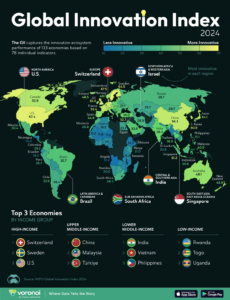
The World’s Most Innovative Countries in 2024
Innovation fuels progress, driving solutions to global challenges like climate change, aging societies, and social fragmentation. It creates jobs, boosts economies, and improves lives worldwide. By fostering creativity and pushing boundaries, we unlock a brighter future for all.
Many thanks to our IP management graduates from all around the globe for your dedication, your fresh perspectives, and your passion for innovation. Go forth and change the world!
Integration of IP in the innovation process
The core process of innovation management starts with the description of the customer benefits and ends with the fulfilment of the customer needs. This means that all process elements that form an interface to the IP strategy development process are already included in the innovation process. The task of the process integration of IP is now to link these elements with the related IP strategy support processes in order to increase the quality of the innovation process.