
Organizing IP Management: From Legal Function to Strategic Business System – Modul 4 MIPLM 2025-26

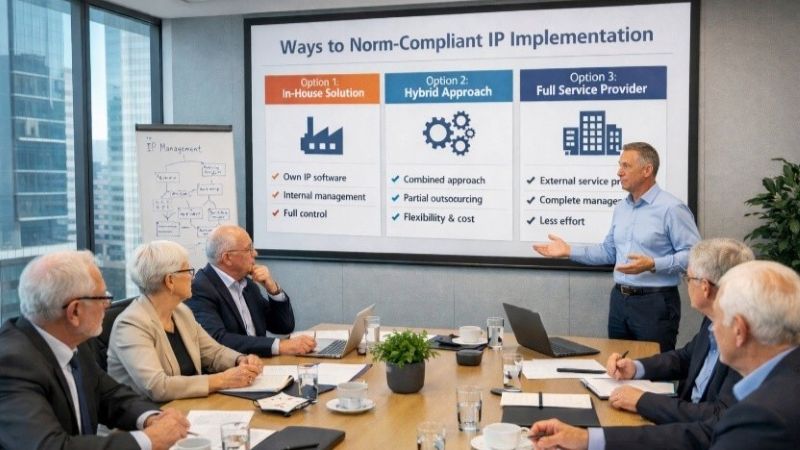
Modern companies continuously generate intangible assets such as inventions, software, designs, and brands. These assets often represent the most valuable resources of innovative organizations. However, in many firms intellectual property management still operates primarily as a legal or administrative function. Patent filings are handled case by case, trademarks are registered when necessary, and enforcement actions occur only when conflicts arise.
Why Companies Need a Systematic Approach to IP Management
This fragmented approach leaves significant value untapped. When IP decisions are disconnected from innovation strategy and business planning, companies risk missing inventions, filing patents too late, or investing in rights that do not support strategic goals. The lecture on the organization of IP management therefore begins with a central premise: intellectual property must be embedded in the overall management system of a company.
An Integrated IP Management System transforms IP from a reactive legal activity into a coordinated organizational process. Instead of acting after innovations occur, the system connects research and development, product management, marketing, legal departments, and executive leadership. Through structured governance, companies can identify inventions early, evaluate their strategic relevance, and determine how they should be protected and exploited. This integration ensures that intellectual property contributes directly to competitive advantage and long‑term value creation.
The Integrated IP Management System and the PDCA Logic
A key concept discussed in the lecture is the Integrated IP Management System (IIPMS). This framework organizes IP activities into clearly defined processes that align with the overall innovation lifecycle of a company. Instead of treating patents, trademarks, and trade secrets as isolated assets, the system coordinates strategic planning, IP generation, portfolio administration, enforcement, and commercialization.
The system relies heavily on process thinking. IP decisions are integrated into innovation projects from the earliest idea stage through commercialization and market entry. Portfolio management becomes dynamic and continuously reviewed to reflect technological changes and market developments. As a result, intellectual property becomes a strategic management tool rather than a purely legal safeguard.
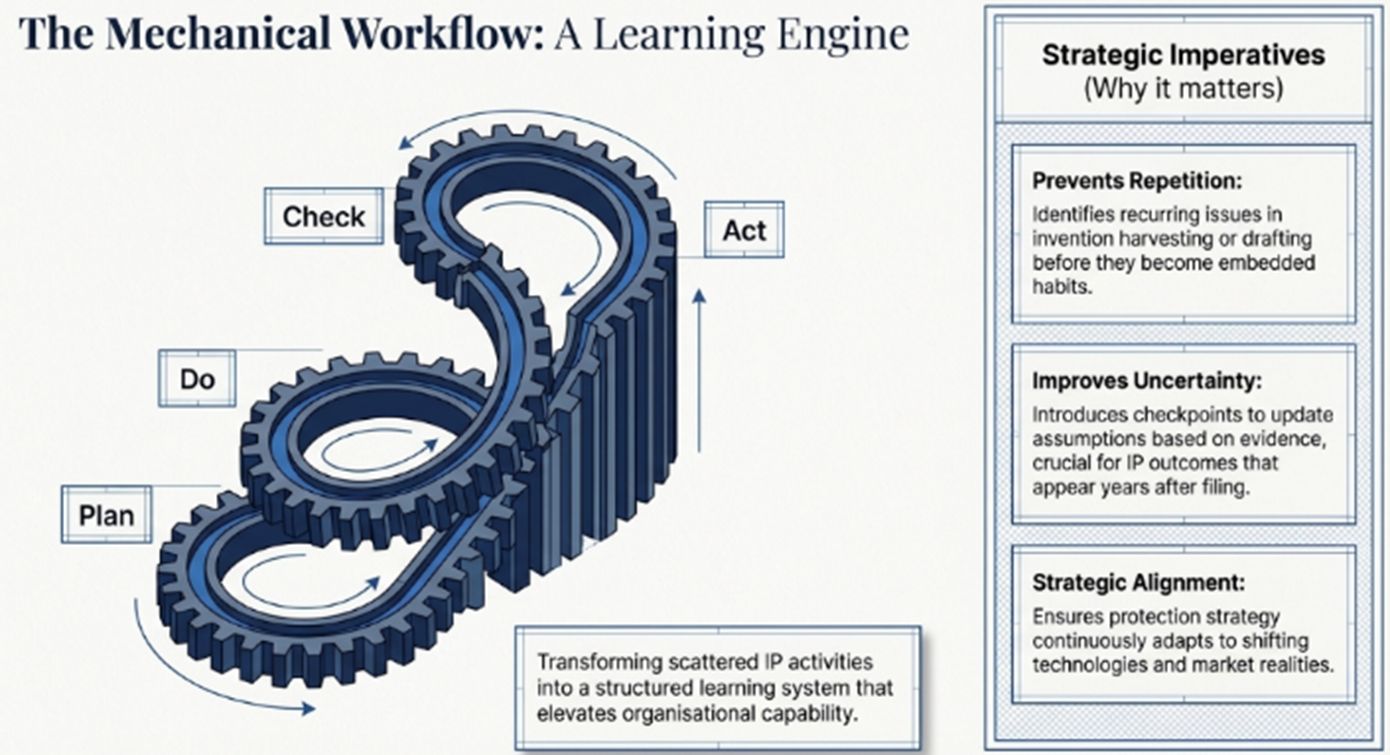 Continuous improvement plays a crucial role in this approach. The lecture highlights the application of the Plan‑Do‑Check‑Act (PDCA) cycle to IP management. The PDCA logic transforms individual IP activities into a learning system. Planning defines the strategic objectives and protection approach. Implementation includes activities such as invention harvesting, patent drafting, and portfolio development. Evaluation examines outcomes, such as the success of patent applications or licensing activities. Finally, improvement adjusts the strategy based on lessons learned.
Because IP outcomes often materialize years after filing decisions are made, organizations must constantly review and update assumptions. The PDCA cycle provides checkpoints that allow companies to adapt their IP strategy before costly mistakes become embedded in organizational routines. This approach also ensures continuous alignment between technological development, market strategy, and intellectual property decisions.
Standards and Organizational Frameworks for IP Management
The lecture also emphasizes the growing importance of formal standards in IP management. Frameworks such as DIN 77006 and ISO 56005 provide guidance on how organizations should structure their intellectual property processes and integrate them into broader management systems.
DIN 77006, a German standard published in 2020, defines the architecture of an Intellectual Property Management System. It specifies key processes including IP strategy, IP generation, administration, risk management, enforcement, and transactions. Importantly, the standard is compatible with other management frameworks such as ISO 9001, making it easier for companies to integrate IP governance into existing quality management systems.
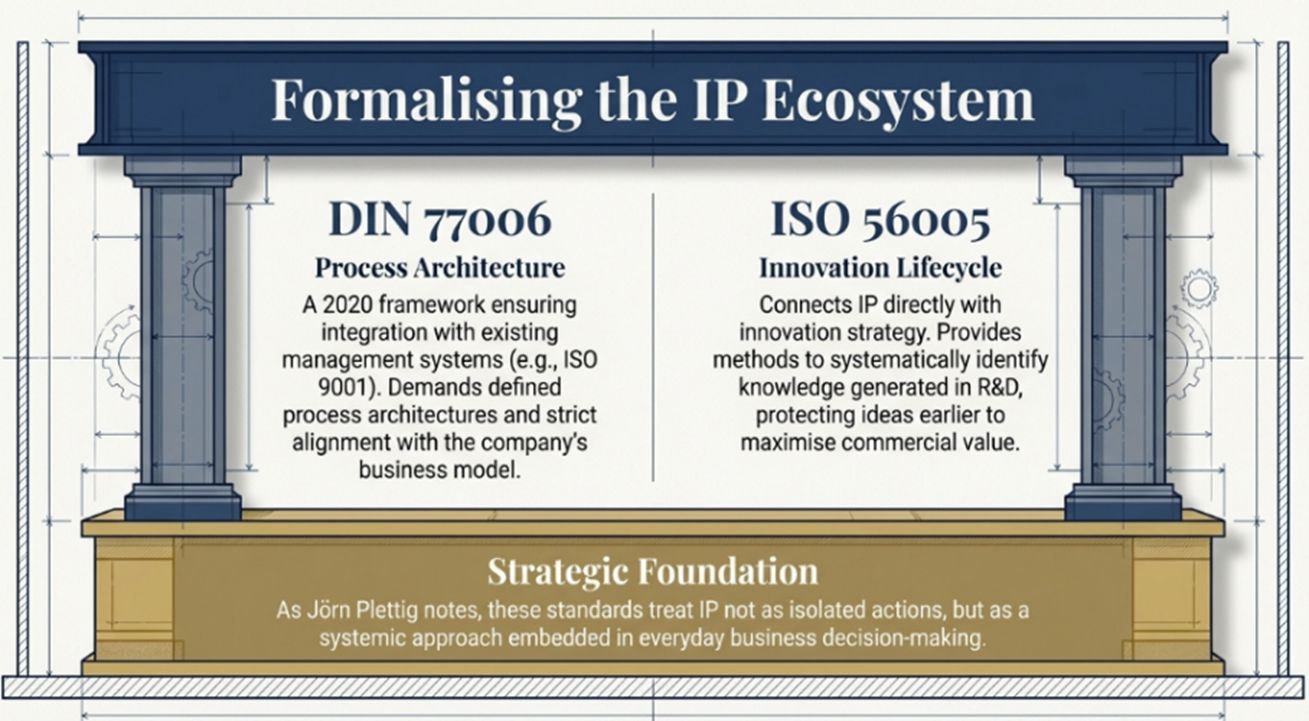
It provides tools and methods for identifying, protecting, and exploiting knowledge generated during research and development activities. By embedding IP considerations within innovation processes, organizations can capture value earlier and reduce the risk of losing strategic technologies.
IP Subject Matter Expert Dr. Jörn Plettig: Integrated IP Management Systems
 During the lecture, IP Subject Matter Expert Dr. Jörn Plettig contributed a systemic perspective on how these standards can be implemented in practice. His approach emphasizes that IP management must be understood as an organizational system rather than a sequence of isolated legal tasks. This means defining clear responsibilities, establishing structured workflows, and designing interfaces between departments such as R&D, legal, and business units. When these interfaces function effectively, IP becomes part of everyday decision‑making across the organization rather than the responsibility of a single department. Here you can find Dr. Jörn Plettig’s page at the digital IP lexicon 🧭dIPlex on “Integrated IP Management Systems”.
Strategic Models for Organizing IP Departments
Another central element of the lecture concerns the organizational positioning of IP departments. Companies can structure their IP functions in different ways depending on their strategic priorities and business models. Four typical models were discussed: the Protection Center, the Differentiation Center, the Profit Center, and the Asset Center.
 In the Protection Center model, the primary objective is defensive protection of technologies and product features. The IP department works closely with research and development to ensure that innovations are patented and competitors are prevented from entering key technological fields. Portfolio size and patent quality become central performance indicators.
The Differentiation Center focuses on optimizing the cost‑benefit ratio of the IP portfolio. Instead of maximizing the number of patents, the organization periodically evaluates which IP rights contribute to strategic positioning and which should be abandoned. This approach emphasizes portfolio efficiency and alignment with business strategy.
In the Profit Center model, intellectual property becomes a source of revenue generation. Licensing activities, technology transfer, and strategic collaborations play an important role. The IP department contributes directly to corporate income through licensing agreements or participation in industry standards.
Finally, the Asset Center model represents the most advanced stage of IP organization. In this configuration, intellectual property is treated as a core strategic asset that shapes the company’s business model. IP assets are actively managed to create new markets, structure industry ecosystems, and generate long‑term economic value. The lecture illustrated how organizations often evolve through these models as their IP capabilities mature.
The Impact of AI Across the Entire IP Lifecycle
Artificial intelligence is beginning to reshape the entire IP lifecycle, from the earliest identification of innovation opportunities to enforcement and commercialization. In the innovation process, AI can support technology mapping, identify promising opportunity spaces, analyse sensor and market data, accelerate design work, and even help tailor product and marketing concepts more precisely to customer needs. In the patent process, AI can improve freedom-to-operate analysis, support invention harvesting, identify protectable customer benefits, assist with drafting patent applications, strengthen novelty searches, and enhance infringement detection.
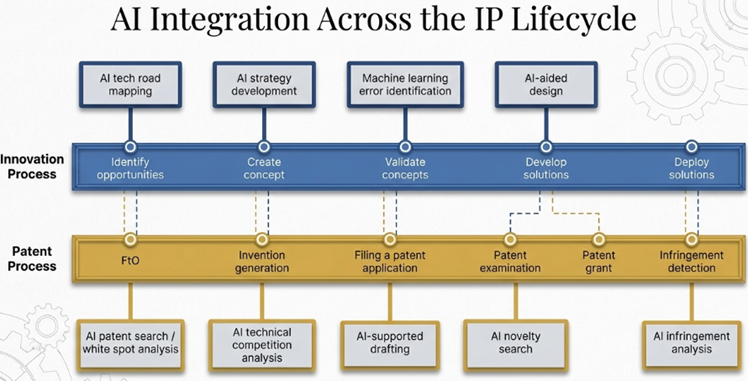
The lecture makes an important point here: AI does not create value automatically. Its impact depends on whether the structure of the IP department is capable of integrating these tools into everyday workflows, decision points, and responsibilities. In that sense, AI is not just a productivity tool for IP teams, but a driver of organizational change that pushes companies to redesign how IP management is structured, coordinated, and continuously improved.
IP Process Management and the Role of Experts
Several IP Subject Matter Experts have contributed content to the lecture in IP Organisation and Management 2025-26. Here are two examples:
IP Subject Matter Expert Max Feuckner: IP Process Management
 While organizational models define strategic orientation, operational effectiveness depends on well‑structured processes. IP Subject Matter Expert Max Feucker contributed insights into how companies can build scalable IP process management systems.
His perspective focuses on practical operational discipline. In many organizations, invention disclosures, patent decisions, and portfolio reviews occur in an ad‑hoc manner. Feucker proposes transforming these activities into a continuous operational workflow that systematically captures innovation output and converts it into strategic IP assets.
Such a process includes structured invention harvesting, evaluation committees for patent decisions, systematic portfolio reviews, and regular risk assessments. By integrating these steps into standard business processes, companies ensure that IP considerations are addressed throughout the innovation lifecycle. The goal is not only to improve legal protection but also to strengthen decision‑making about where to invest in technology development and how to position innovations in the market. Here you can find Max Feuckers page at the digital IP lexicon 🧭dIPlex on “IP Process Management”.
IP Subject Matter Expert Bas Albers: IP Strategies for SME
 Another important perspective presented in the lecture came from IP Subject Matter Expert Bas Albers. His contribution focused on the management and documentation of IP assets, particularly in the context of small and medium‑sized enterprises.
Effective IP strategy begins with a clear overview of all intellectual property assets within an organization. This includes patents, trademarks, copyrights, and trade secrets. Without systematic documentation, valuable assets may remain hidden or poorly managed. Bas Albers therefore emphasized the importance of establishing transparent IP asset registers that record ownership, legal status, and strategic relevance.
Such documentation serves several functions. It enables management to make informed strategic decisions, ensures legal clarity regarding ownership and rights, and facilitates collaboration between technical experts, legal professionals, and business decision makers. For SMEs in particular, structured asset documentation can significantly improve the ability to protect and commercialize innovation. Here you can find Bas Albers page at the digital IP lexicon 🧭dIPlex on “IP Strategies for SME”.
From Legal Function to Strategic Capability
The central message of the lecture is that intellectual property management must evolve from a legal support function into a strategic organizational capability. Companies that treat IP as a peripheral legal activity risk losing competitive advantages, overlooking valuable inventions, and failing to exploit their technological strengths.
By contrast, organizations that implement integrated IP management systems can systematically align innovation, strategy, and market positioning. Standards such as DIN 77006 and ISO 56005 provide valuable frameworks for building these systems, while organizational models help companies position their IP departments according to strategic priorities.
Equally important are the operational processes that translate strategy into daily practice. Structured invention management, portfolio evaluation, and asset documentation ensure that intellectual property becomes a living component of business decision‑making.
The contributions of IP Subject Matter Experts such as Dr. Jörn Plettig, Max Feucker, and Bas Albers demonstrate how theory and practice can be combined to build effective IP management structures. Their perspectives illustrate that successful IP management requires not only legal expertise but also organizational design, process discipline, and strategic leadership.
As innovation cycles accelerate and intangible assets become increasingly central to corporate value creation, the ability to organize intellectual property management effectively will become a decisive factor in technological competition. Companies that master this organizational challenge will be better positioned to transform knowledge into sustainable economic success.