
Whitepapers, Playbooks and Reviews in IP Management – Structuring Complexity into Strategic Orientation


In many IP-driven industries, the challenge is not access to information. It is the ability to structure it. Companies operate in environments where technological developments, legal frameworks, and competitive dynamics evolve simultaneously. New data points, legal interpretations, and market signals emerge continuously, often without a clear hierarchy or immediate relevance. As a result, decision-makers are confronted with fragmented insights that are difficult to connect, compare, or translate into action.
What is missing is not expertise, but orientation. Executives and project leaders need a structured view that allows them to understand how different elements interact, where the real risks and opportunities lie, and which decisions actually matter. This is where whitepapers, playbooks, and structured reviews become essential.
Whitepapers, playbooks, and reviews transform IP expertise into structured strategic orientation. They help companies navigate complexity, align stakeholders, and make informed decisions in uncertain environments. For IP Subject Matter Experts, they offer a way to position themselves as providers of strategic clarity rather than isolated expertise. And for companies, they provide what is often missing in IP management: a coherent framework that connects insight with action.
Here is an explainer video about dIPlex whitepapers
The Problem of Fragmented Knowledge
IP Subject Matter Experts generate valuable insights across multiple formats: articles, case studies, presentations, and advisory work. However, for companies trying to make strategic decisions, these insights often remain disconnected.
The result is a familiar situation. Important information exists, but it is not organized in a way that supports decision-making at the management level.
Executives do not need isolated answers. They need structured perspectives that connect legal, technical, and economic considerations into a single narrative. Without this integration, IP remains a fragmented function rather than a strategic layer.
Whitepapers and Playbooks as Strategic Products
Whitepapers, playbooks, and reviews address exactly this gap. They are not simply longer pieces of content. They are structured frameworks that organize complex IP topics into decision-relevant formats.
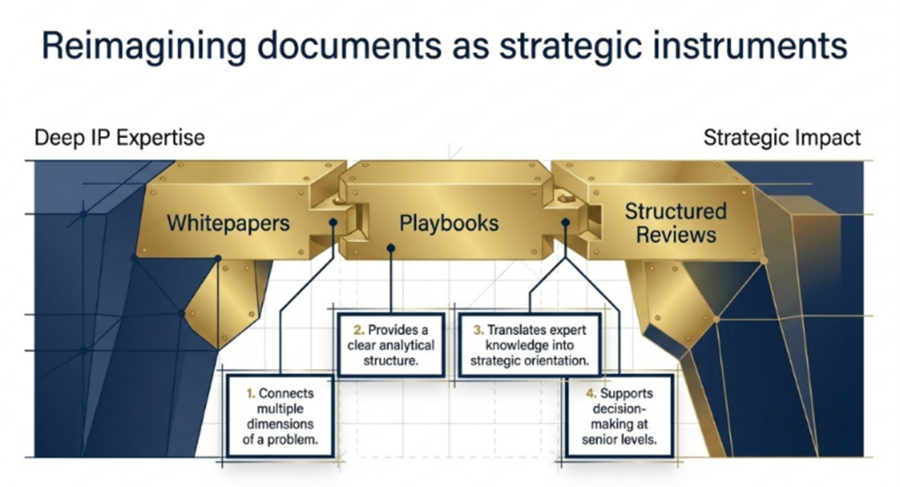
A well-designed whitepaper or playbook:
- connects multiple dimensions of a problem
- provides a clear analytical structure
- translates expert knowledge into strategic orientation
- supports decision-making at senior levels
In this sense, these formats are not content. They are strategic tools.
They allow companies to understand not only what is happening, but what it means for their specific context.
From Explanation to Strategic Framing
What distinguishes whitepapers and playbooks from other formats is their ability to frame a topic holistically. Instead of focusing on a single issue, they map the broader landscape. They define the relevant questions, structure the available options, and highlight the implications of different choices.
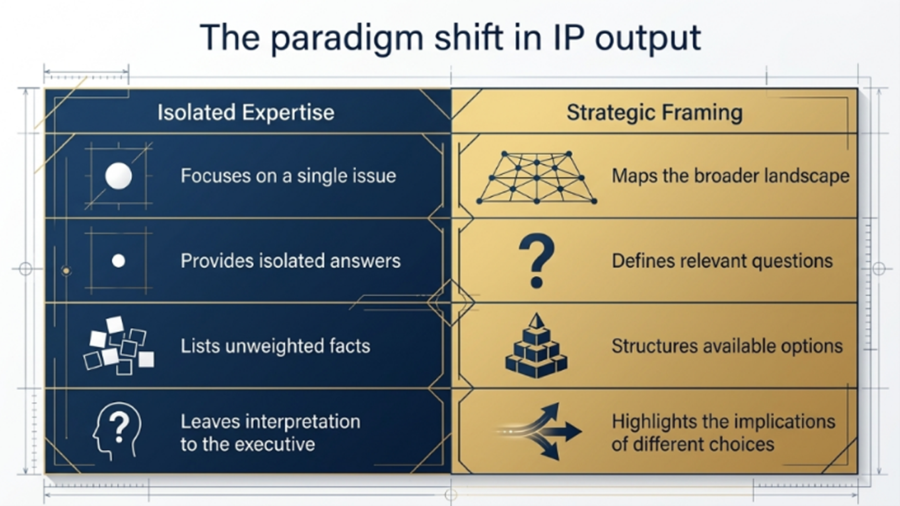
This changes the role of the IP Subject Matter Expert. The expert no longer acts only as a provider of answers, but as an architect of decision frameworks. This is particularly relevant in situations where companies face uncertainty and need orientation rather than isolated expertise.
Real Examples from the dIPlex
The digital IP Lexicon 🧭dIPlex includes several examples that illustrate how whitepapers, playbooks, and reviews can create strategic value.
One example is the work of Dominique Christ on C-level communication in IP benchmarking.
👉 https://profwurzer.com/diplex/docs/ip-benchmarking/c-level-communication/
This contribution addresses a critical challenge: how to translate IP performance into a language that is relevant for executive decision-making. It structures benchmarking results in a way that enables strategic discussions at the highest management level.

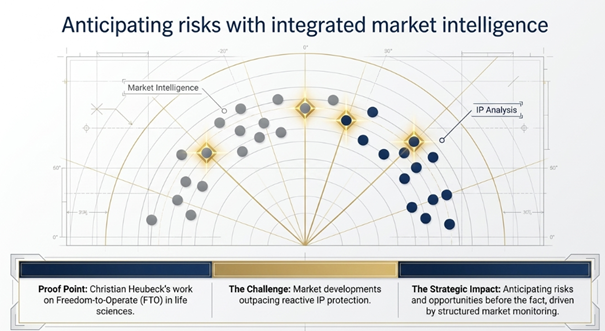
Another example is the work of Christian Heubeck on market monitoring and freedom-to-operate analysis in the life sciences.
Here, the focus is on integrating market intelligence with IP analysis. The structured approach allows companies to anticipate risks and opportunities, rather than reacting to them after the fact.
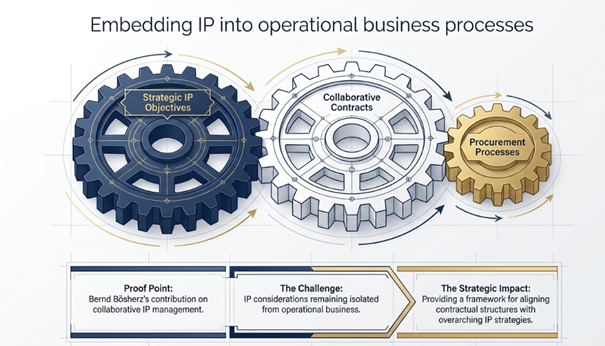
A third example is the contribution of Bernd Bösherz on the role of IP in procurement and collaboration contracts.
This work demonstrates how IP considerations can be embedded into operational business processes. It provides a framework for aligning contractual structures with strategic IP objectives.
Across all three examples, the pattern is clear. The value lies not only in the information provided, but in the way it is structured.
Why These Formats Matter for IP Management
Whitepapers, playbooks, and reviews are particularly effective in IP management because they address the need for integration. IP is inherently cross-functional. It connects legal, technical, and business dimensions. However, in many organizations, these dimensions are treated separately. Structured formats help bridge these gaps. They:
- create a shared understanding across functions
- align stakeholders around a common framework
- support consistent decision-making
- enable strategic discussions at management level
They provide the missing link between detailed analysis and strategic action.
Beyond the IP Community
Another key advantage of these formats is their ability to communicate beyond the IP community. While specialized IP discussions often remain within expert circles, whitepapers and playbooks are designed to engage broader audiences.
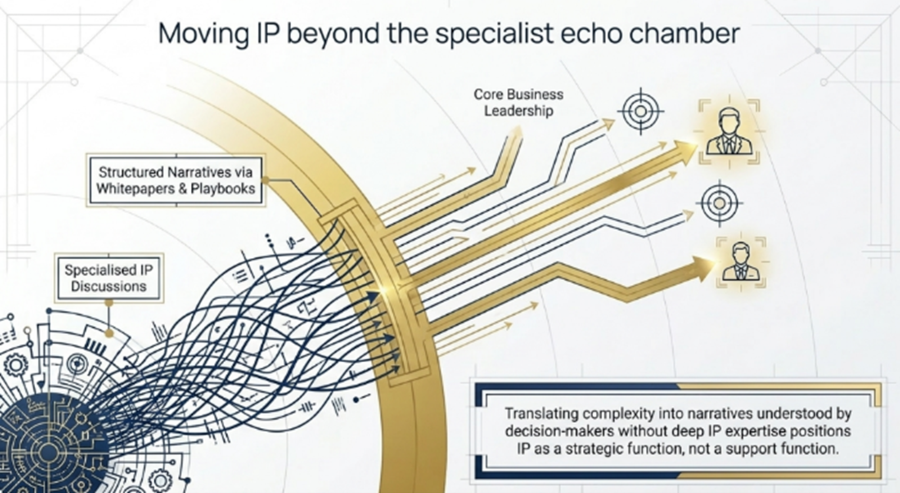
They translate complexity into structured narratives that can be understood by decision-makers without deep IP expertise. This makes them powerful tools for positioning IP as a strategic function within organizations. Instead of being perceived as a support function, IP becomes part of the core business discussion.
The Role of the Platform
On platforms like the digital IP Lexicon 🧭dIPlex, whitepapers, playbooks, and reviews are embedded in a broader ecosystem.
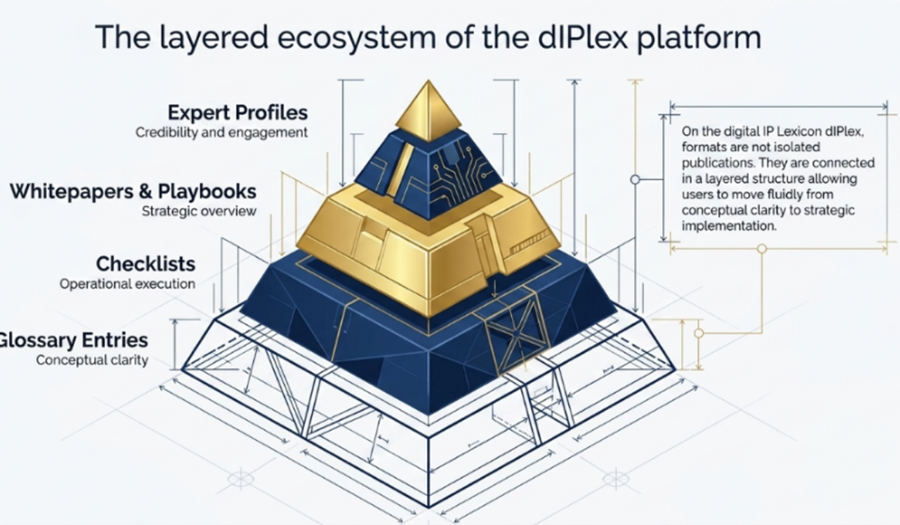
They are connected to:
- glossary entries for conceptual clarity
- checklists for operational execution
- expert profiles for credibility and engagement
This creates a layered structure where users can move from strategic overview to detailed implementation.
For the IP Subject Matter Expert, this means that these formats are not isolated publications, but central elements of a broader positioning and business development strategy.