
Practical Question Robotics/Mechatronics Philipp Krauss: From Smart Components to Strategic Control – IP for Mechatronic Learning Systems

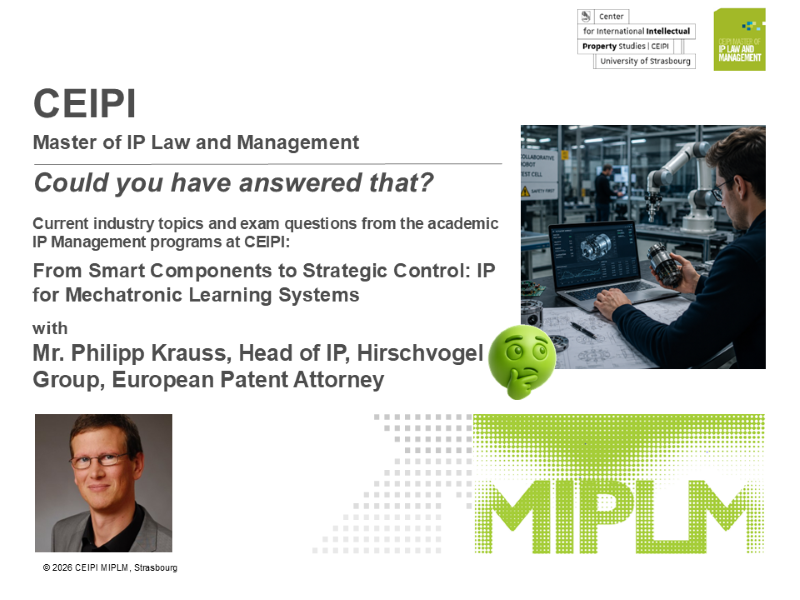
Mechatronic systems are no longer only about the integration of mechanics, electronics and software into a functional component. In robotics and autonomous systems, they increasingly become intelligent subsystems that sense, interpret, decide and act within a wider operating environment. This is exactly the shift described in the study The Robotics Strategy Gap: robotics companies are no longer developing isolated machines, but autonomous systems connected to sensors, AI models, control software, operational data, cloud infrastructure and human workflows.
This changes the IP question for mechatronic suppliers. A compact actuator-sensor module for collaborative mobile robots may be valuable not only because of its mechanical precision or embedded sensors, but because it combines edge-AI control software, safety logic, calibration routines, test data and human-robot-interaction patterns. The commercially relevant asset may therefore sit in the interaction between hardware, control logic, field data and system integration know-how.
The Philipp Krauss case highlights this strategic tension. A European mechatronic systems supplier is developing a module for collaborative mobile robots used in warehouses and light manufacturing. A robotics OEM wants to integrate the module into a new autonomous platform and asks for a development partnership, access to pilot test data and the right to adapt the control logic to different robot configurations.
The opportunity is attractive because the OEM controls market access and can accelerate adoption. But the risk is equally clear: if the supplier shares too much, it may become a replaceable hardware provider while the OEM captures the system-level learning, customer data and future platform control. If the supplier restricts access too strongly, market entry and integration may slow down.
This is why the case fits directly into the logic of the Robotics Strategy Gap. The study argues that robotics IP must move beyond the question of whether a mechanical component, control method or software function can be patented. The more important management question is what a company must control in order to scale, collaborate, operate safely, preserve room to act and maintain bargaining power.
Here you find the findings of this study: The Robotics Strategy Gap: What Autonomous Systems Companies Need, and What IP Advice Still Often Fails to Integrate.
Against this background, the CEIPI IP Business Academy integrates practice-based questions from industry into its teaching. These questions help students understand IP not only as a legal protection tool, but as a management instrument for strategic decision-making in embodied intelligence. In mechatronic systems, this means looking beyond the component and asking where the defensible control point arises across mechanics, sensors, software, data, safety and learning behaviour.
We are therefore pleased to include this industry case study with Philipp Krauss, which brings a practitioner perspective from the field of intelligent mechatronic subsystems for robotics and human-robot-AI interaction.
His practical question focuses on a central issue for mechatronic suppliers: how to structure the IP position when a component creates value not only through the physical product, but also through control software, training data, system integration know-how and learning behaviour in the field. Here is Philipp Krauss’ assessment:
“In my view, this case study is highly relevant to actual practice because it addresses a central challenge in modern industrial IP management: particularly with mechatronic and AI-driven systems, value no longer resides solely in the physical product but increasingly in software, data, system integration, know-how, and learning capabilities. Especially in collaborations with OEMs, a well-conceived IP, data, and contractual strategy, developed at an early stage, p Kaudetermines whether a supplier can secure long-term strategic value creation or is relegated to the role of a replaceable component provider. The topic is therefore ideally suited for an advanced training program in IP management, as it integrates IP strategy, freedom-to-operate (FTO) analysis, data rights, collaboration agreements, and business models in a practical context.“
Mini Case Study
A European mechatronic systems supplier is developing a compact actuator-sensor module for collaborative mobile robots used in warehouses and light manufacturing. The module combines precision mechanics, embedded sensors, edge-AI control software and a safety layer that adapts robot movement when humans enter the working zone.
The first commercial opportunity comes from a robotics OEM that wants to integrate the module into a new autonomous platform. The OEM asks for a development partnership, access to test data from pilot installations and the right to adapt the control logic to different robot configurations. At the same time, the supplier sees that the real future value may not lie in the component alone, but in the learning behaviour of the module: movement data, calibration routines and human-robot-interaction patterns could become the basis for a broader product family.
The management team must decide how openly to collaborate with the OEM. Too much restriction may slow market entry and reduce adoption. Too much openness may turn the supplier into a replaceable hardware provider while the OEM captures the system-level learning, customer data and future platform control.
Practical Question
How should a mechatronic systems supplier structure its IP position when a component for human-robot-AI interaction creates value not only through the physical product, but also through control software, training data, system integration know-how and learning behaviour in the field?
Why This Question Matters in Practice
This question becomes relevant when robotics suppliers move from selling defined components to contributing intelligent subsystems that interact with humans, adapt to real environments and generate operational data over time. In such situations, the economic value of IP is no longer limited to the initial invention. It is distributed across mechanical design, sensor architecture, embedded software, test data, calibration processes, safety concepts, integration knowledge and customer-specific adaptations.
The question matters especially for mechatronic suppliers, robotics start-ups, automotive and industrial component manufacturers, IP managers, CTOs, business development teams and legal departments involved in joint development or platform integration. Their challenge is not only to obtain protection, but to decide where control over future value should sit.
The issue becomes critical under three conditions: first, when a larger OEM or platform owner controls market access; second, when field data and system learning improve the product after deployment; and third, when contractual choices made at the start of cooperation determine who can reuse, scale or monetise the resulting knowledge.
A strategically weak IP position may allow fast market entry but leave the supplier with limited bargaining power in the next product generation. A strategically strong position does not simply mean filing more patents. It means identifying which elements should be patented, which should remain as protected know-how, which data rights must be reserved, and which interfaces should be contractually controlled.
For IP management, the practical task is therefore to connect portfolio decisions, FTO, development contracts and business strategy before the first pilot project creates irreversible dependencies.
Philipp Krauss
 Philipp Krauss is Head of Intellectual Property at Hirschvogel Group, Patentassessor and European Patent Attorney. He was admitted as a European Patent Attorney in 2015 and focuses on IP in electronics, mechanics and mechatronics, particularly in automotive and industrial technology contexts. His current work includes patent application drafting, portfolio management, IP strategy development, FTO analyses, advice to R&D teams, and IP-related contract matters such as development and licence agreements.
Before joining Hirschvogel Group, Philipp Krauss held IP roles at KraussMaffei Group, Dräxlmaier Group, Knorr-Bremse and Aurigium Patentanwälte. Earlier in his career, he spent twelve years at National Instruments in roles including Contracts Manager, Academic Relations and MarCom Manager. He studied mechatronics and automation at Fachhochschule München and EPF Engineering School, and later completed legal studies for patent attorneys at FernUniversität in Hagen.