GreenTech IP and the journey from sustainable processes to industrial scale

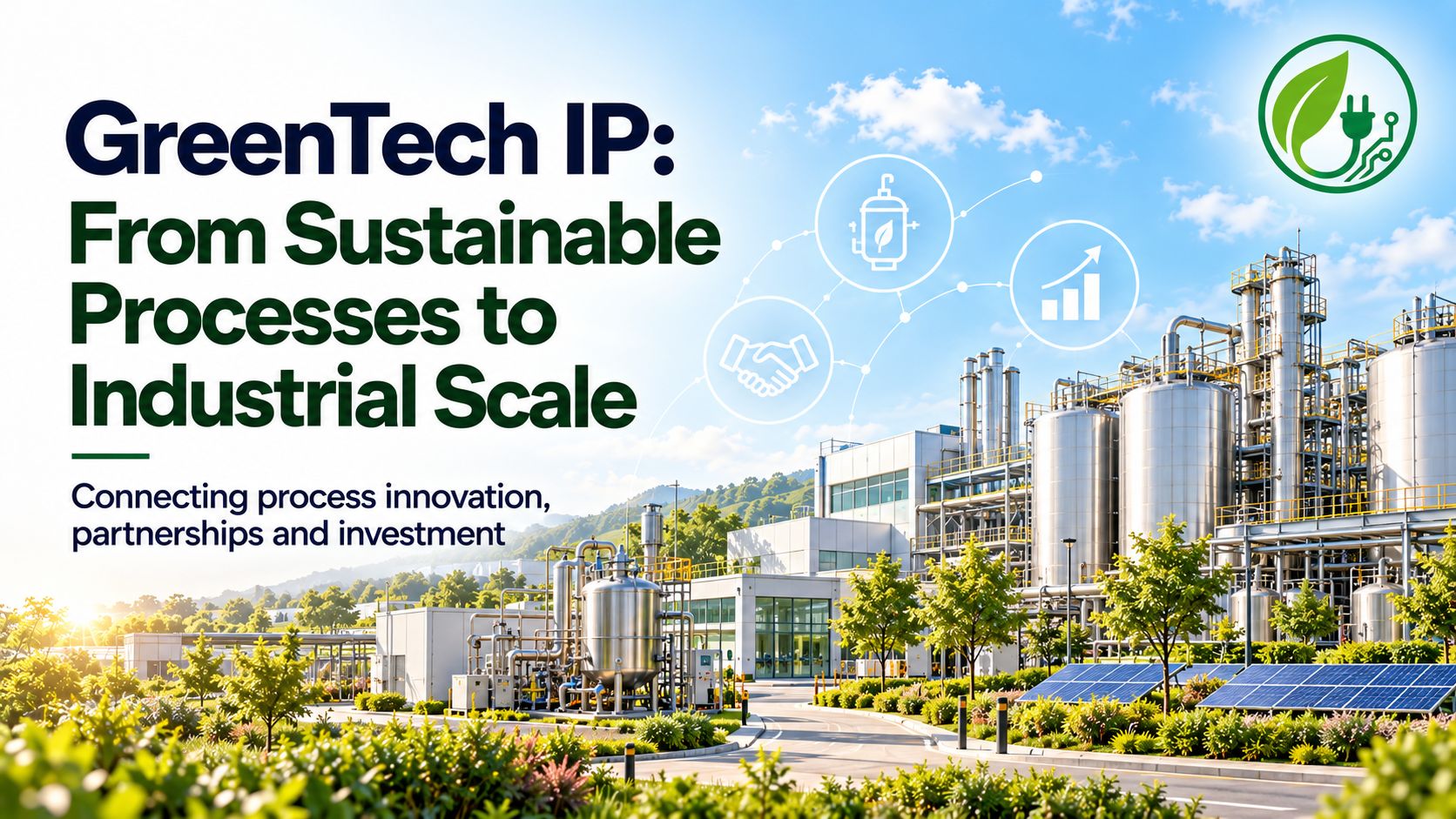
A sustainable production process can create substantial value while delivering a product that looks much like its conventional equivalent. The advantage may lie in lower costs, better yields, different feedstocks or more efficient resource use. For the company developing that process, industrial scale raises a practical question: how can it retain the value of its contribution as production expands and more partners become involved?
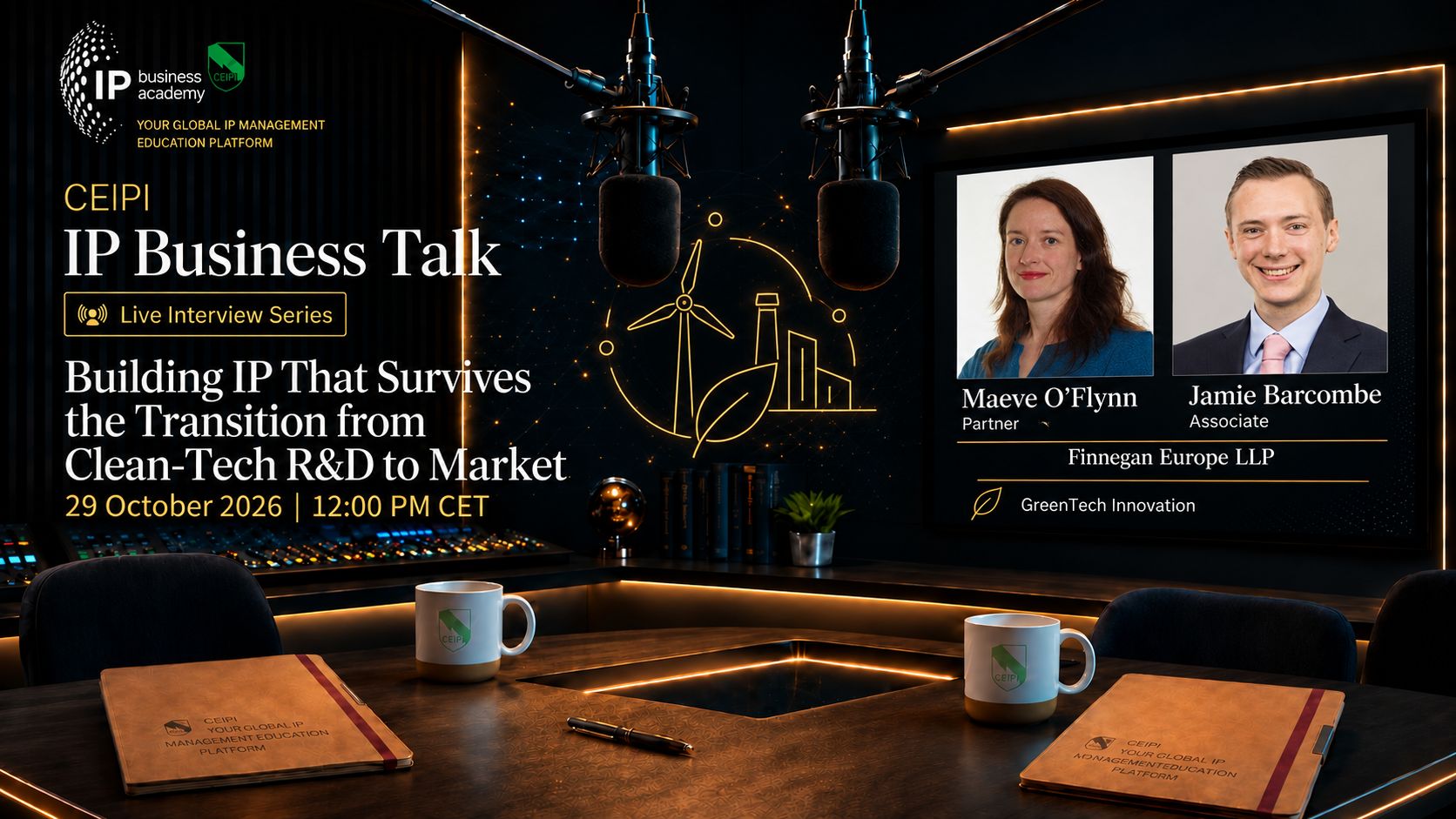
Maeve O’Flynn, Partner at Finnegan, provides a concrete starting point in Intellectual Property Strategies for Developing Biofuels, co-authored with Jamie Barcombe and published in July 2023. Their article explains that biofuel producers may compete through improved processes while supplying products whose characteristics are constrained by established standards.
They connect this challenge with the commercial usefulness of process patents, production across different territories, confidential operating knowledge and freedom to operate. Together, these considerations invite a wider management question: what must a company control so that a better production route can become a scalable business?
Several voices from the GreenTech ecosystem help develop that question. Their contributions connect application choices, capital, commercial execution and leadership. The IP implications below are our editorial interpretation of their published work.
Michael Liebreich and the importance of choosing the application
Michael Liebreich’s Hydrogen Ladder Version 5.0, published in 2023, provides a useful application perspective. His discussion of aviation considers both bio-based routes and hydrogen’s possible contribution to future fuels, with limited biological feedstocks influencing the comparison.
The management lesson is to assess a production technology within its intended application. A promising process needs a clear account of the customers it serves, the alternatives they have and the resources required for deployment.
For IP planning, our inference is that application choices should shape protection priorities. A company supplying an intermediate material faces different commercial interfaces from one licensing a complete production process. The relevant territories, partners and technical dependencies may also differ.
Before expanding its portfolio, management can therefore ask: which application makes our process valuable, and which technical capabilities must we carry into that market? This connects protection with the commercial route the company intends to pursue.
Daria Saharova and the capital required to move beyond the pilot
Daria Saharova brings the investment perspective into the discussion. In her announcement of World Fund’s first fund, she highlights backing companies with substantial climate performance potential. World Fund’s accompanying fund-closing announcement identifies the financing gap at the Series B stage, when companies may need significant capital to build production facilities.
This gives the IP discussion a practical financing context. A pilot can demonstrate technical performance while leaving important questions about the proposed expansion unresolved.
Our IP interpretation is that a company should explain which capabilities support its production advantage and which rights allow it to reproduce that advantage. Investors need clarity about ownership, licensed technology, confidential know-how and developments created with partners.
For example, a pilot built with an industrial collaborator may generate valuable process improvements. Establishing how those improvements can be used in subsequent facilities helps management present a more credible expansion plan. The IP position becomes part of the evidence supporting the next investment milestone.
Nikolai Dobrott and the connection between strategy and execution
Nikolai Dobrott adds a perspective on the commercial work behind the energy transition. In Apricum’s fifteenth-anniversary interview, he describes the development of its advisory services as technologies and markets evolved. He connects that work with companies seeking to scale and develop projects, alongside investors seeking to finance them.
For an emerging GreenTech supplier, this highlights the need to connect technical development with a workable commercial structure. Manufacturing, licensing, joint development and project delivery each place different demands on the company’s capabilities.
Our IP inference is that management should examine the rights required by its chosen structure. Which technical information must a manufacturing partner receive? Who may use subsequent improvements? Can the company license its process to another operator or enter a new territory?
Answering these questions before a major transaction helps align the technology contribution with the intended business. It also makes dependencies visible while management still has room to negotiate and adapt.
Chris Wedding and the trust needed during scale-up
Chris Wedding brings leadership and communication into the picture. In Climate investors don’t fund perfection, published in July 2026, he discusses the pressure founders can feel to project certainty during fundraising, difficult pilots and missed milestones. He argues that candid discussion of challenges can strengthen trust with investors, employees and customers.
That perspective matters when a process technology moves towards industrial production. Management needs to explain what has been demonstrated, what remains uncertain and how the team is addressing the next development steps.
Our IP interpretation concerns how to support those conversations. Teams should establish which evidence can be shared, which technical details require confidentiality and who should review disclosures before they reach potential partners.
This preparation allows founders to discuss progress and difficulties with useful specificity. It also helps capture the knowledge generated when a pilot requires redesign, process adjustment or new operating methods. Those lessons may become valuable capabilities for future installations.
Bringing the ecosystem back to the IP decision
These perspectives connect the production process with the conditions required for industrial scale. Liebreich sharpens the application question. Saharova’s investment context highlights the capital needed for expansion. Dobrott connects strategy with commercial execution, while Wedding examines the trust needed to navigate uncertainty.
For a GreenTech leadership team, a practical review can begin with six questions:
- Which application gives our process a compelling commercial purpose?
- Which technical capabilities create the production advantage?
- Which rights and permissions allow us to reproduce that advantage?
- What must we share with partners, and under which conditions?
- Can we use improvements from the pilot in future facilities and markets?
- How does our IP position support the next financing and deployment milestones?
These questions connect directly with our Industry Focus GreenTech on the IPBA Plattform, which examines the relationships between IP, industrial scale-up, investment readiness, collaboration and strategic control.
O’Flynn and Barcombe’s biofuels article provides the starting point: a company’s valuable contribution may reside within the process that produces a familiar product. The ecosystem perspective extends that discussion to the applications, finance, partnerships and organisational capabilities needed to bring the process into wider use.
For founders, investors and industrial partners, the shared task is to build an IP position that supports both deployment and the company’s ability to retain value as production grows.