Pin it

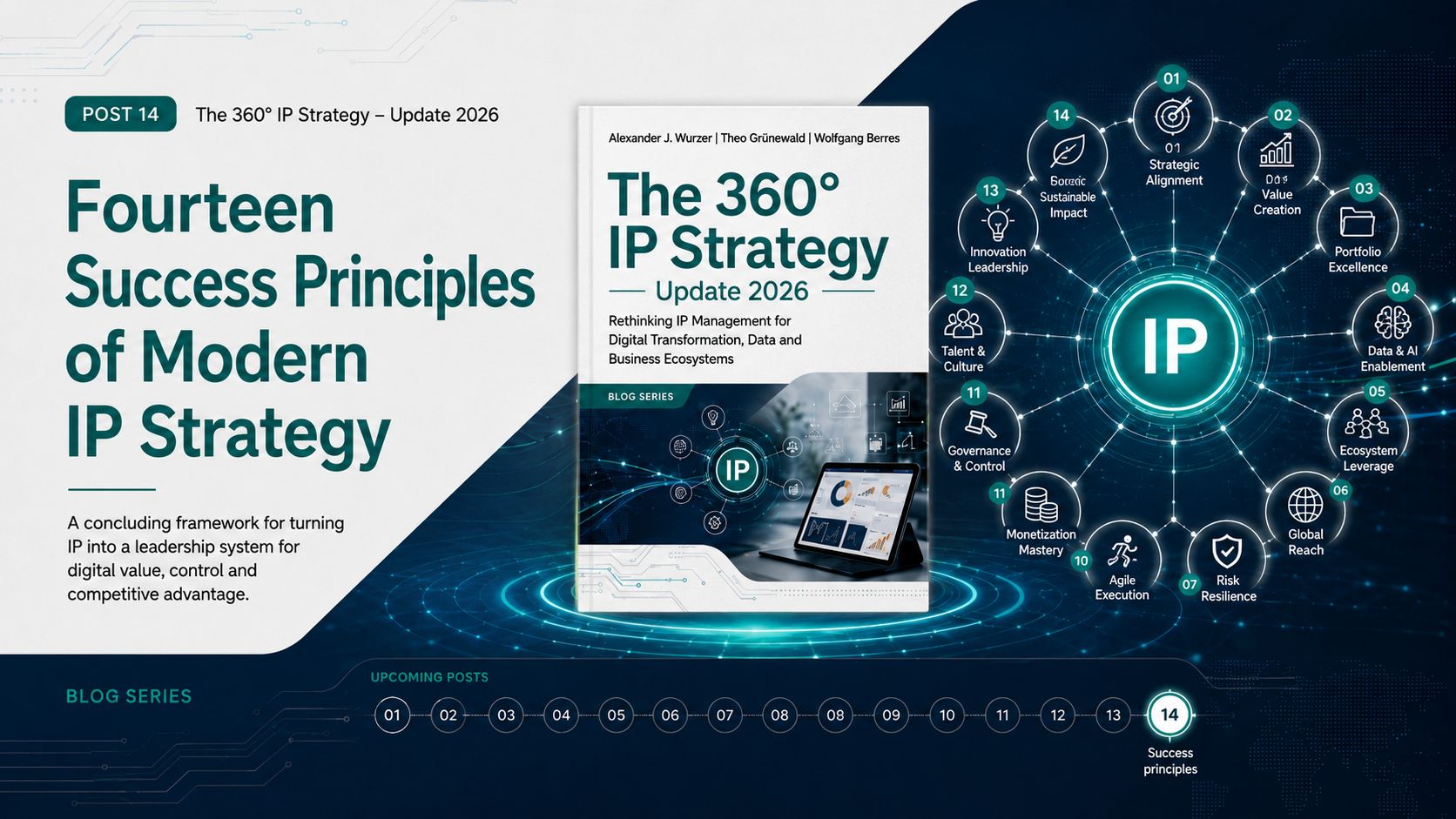
Fourteen Success Principles of Modern IP Strategy

The original 360° IP Strategy ended by condensing its logic into ten success principles. Their message was clear: IP is a competitive instrument, it must be thought from the customer backwards, and it only creates value when it is integrated into mark ...

Read More
Pin it

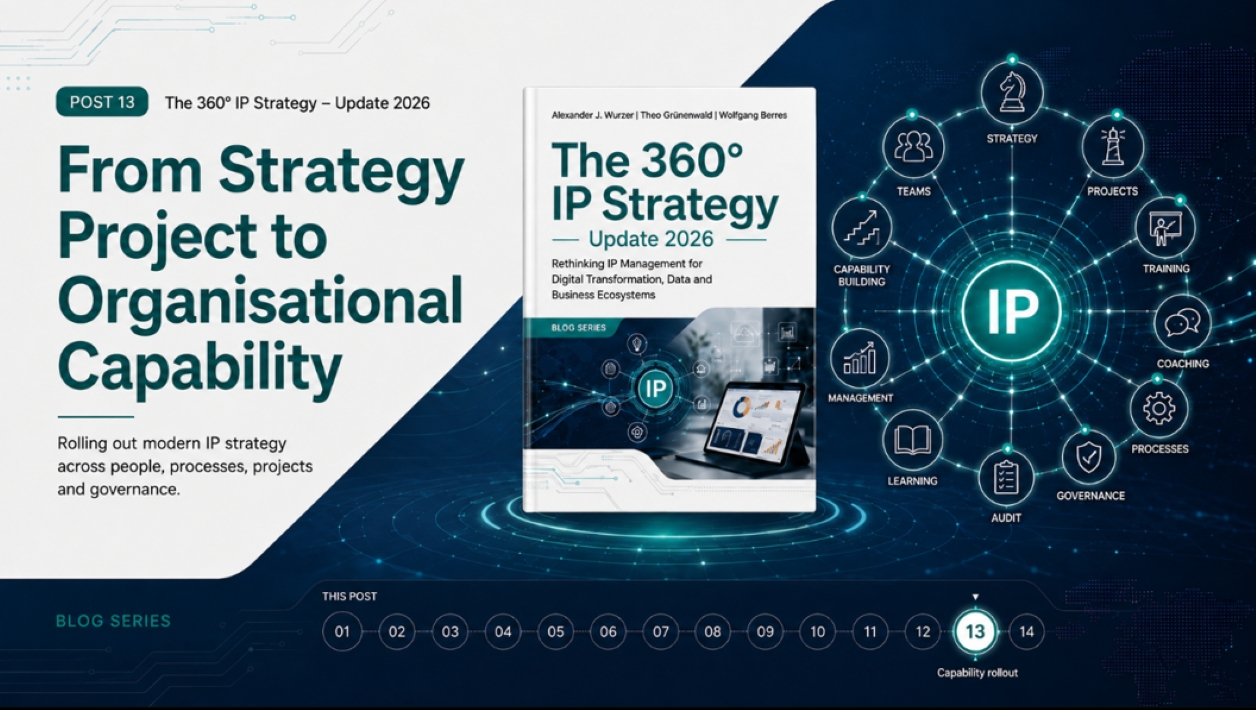
From Strategy Project to Organisational Capability: Rolling Out Modern IP Strategy

The original 360° IP Strategy did not end with designing a patent portfolio. It devoted an entire internal perspective to the question of how strategic IP thinking becomes repeatable organisational behaviour. A strategy can identify the right customer ...

Read More
Pin it

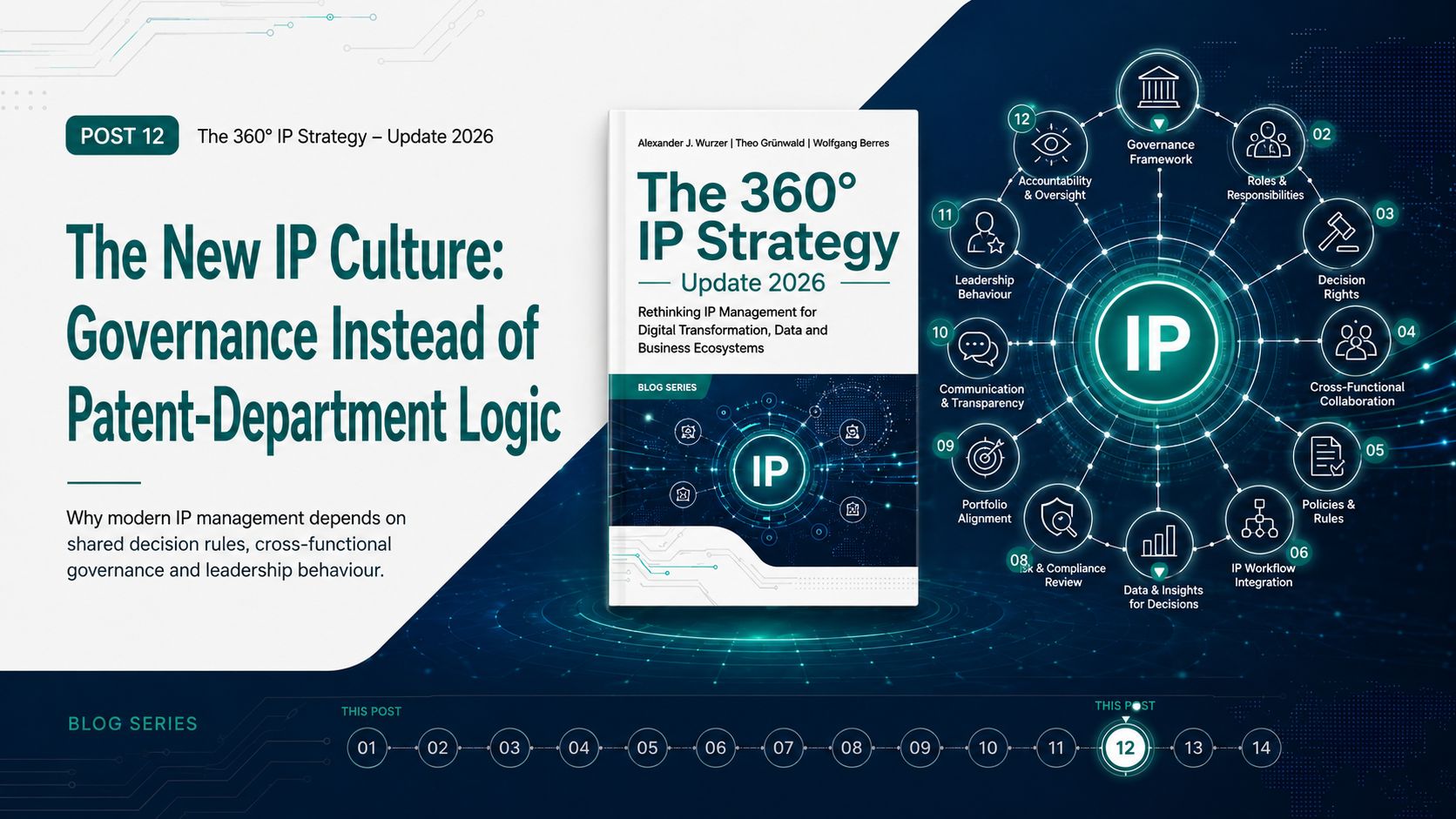
The New IP Culture: Governance Instead of Patent-Department Logic

The original 360° IP Strategy argued that IP culture is revealed by the way an organisation thinks and acts, not by the number of patents displayed in a reception area. A company whose IP process begins only when an engineer submits an invention discl ...

Read More
Pin it

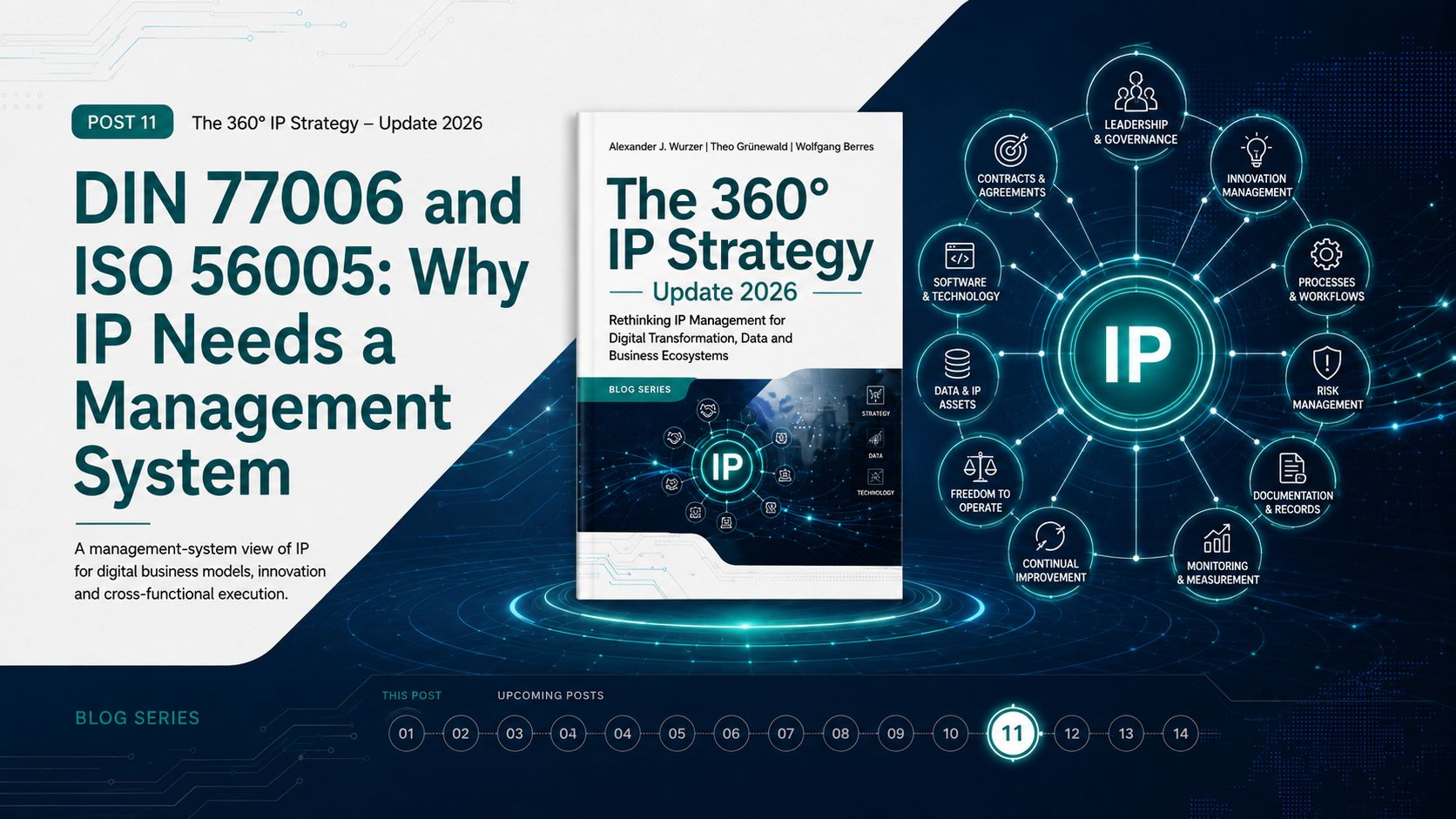
DIN 77006 and ISO 56005: Why IP Needs a Management System

The original 360° IP Strategy already contained a management-system idea, even before today’s standards gave it a formal structure. IP should not begin with the right itself or with the administrative needs of a patent department. It should begin with ...

Read More
Pin it

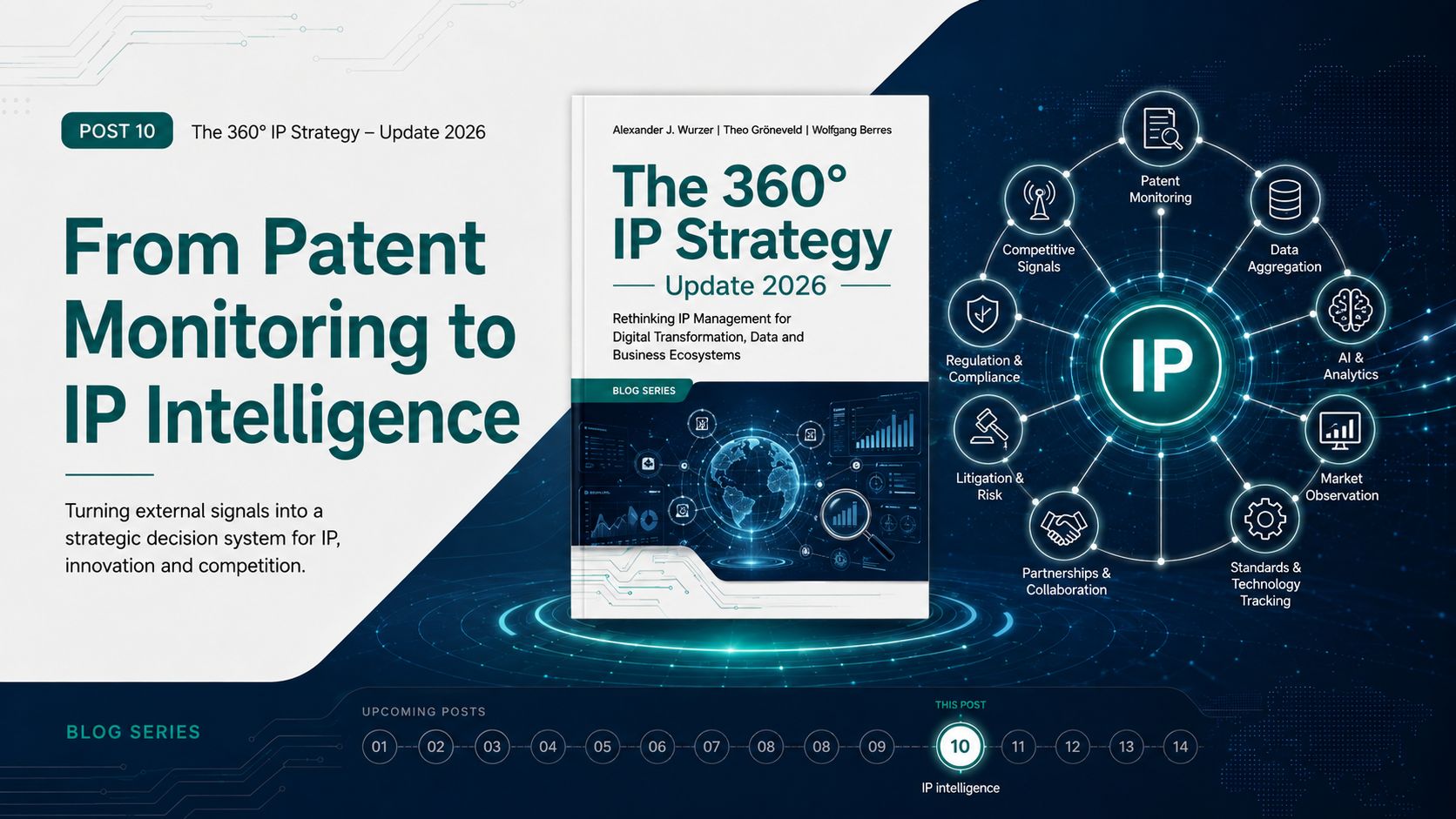
From Patent Monitoring to IP Intelligence

The original 360° IP Strategy treated patent monitoring as a central function of integrated IP management. Patent publications were not merely legal documents to archive. They were indicators of technological competition, sources of technical knowledg ...

Read More
Pin it

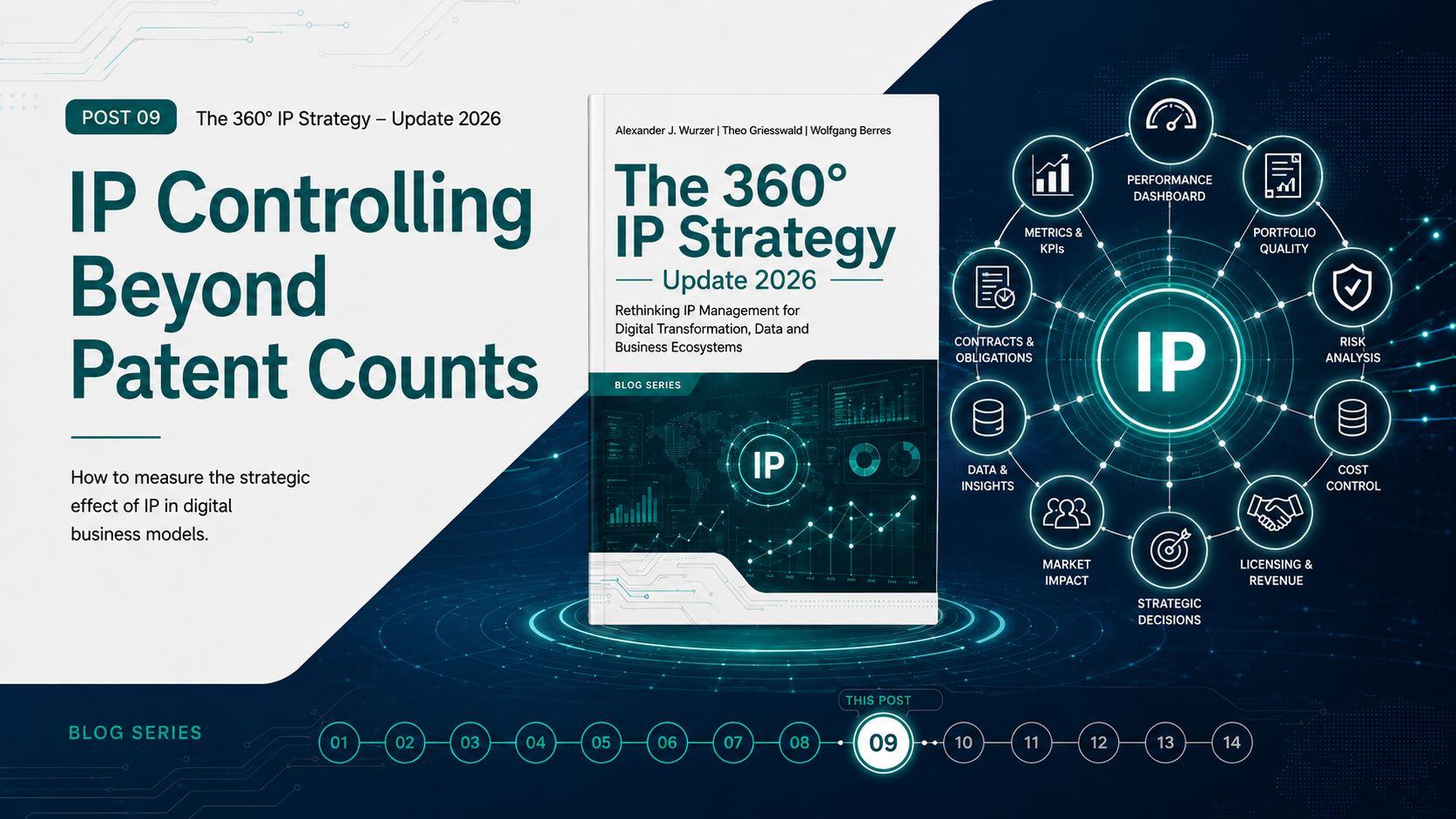
IP Controlling Beyond Patent Counts

IP controlling must go beyond counting patents, filings or renewals. In digital business models, strategic value often lies in software, data, interfaces, workflows, contracts and ecosystem positions. The key question is therefore not how much IP a co ...

Read More
Pin it

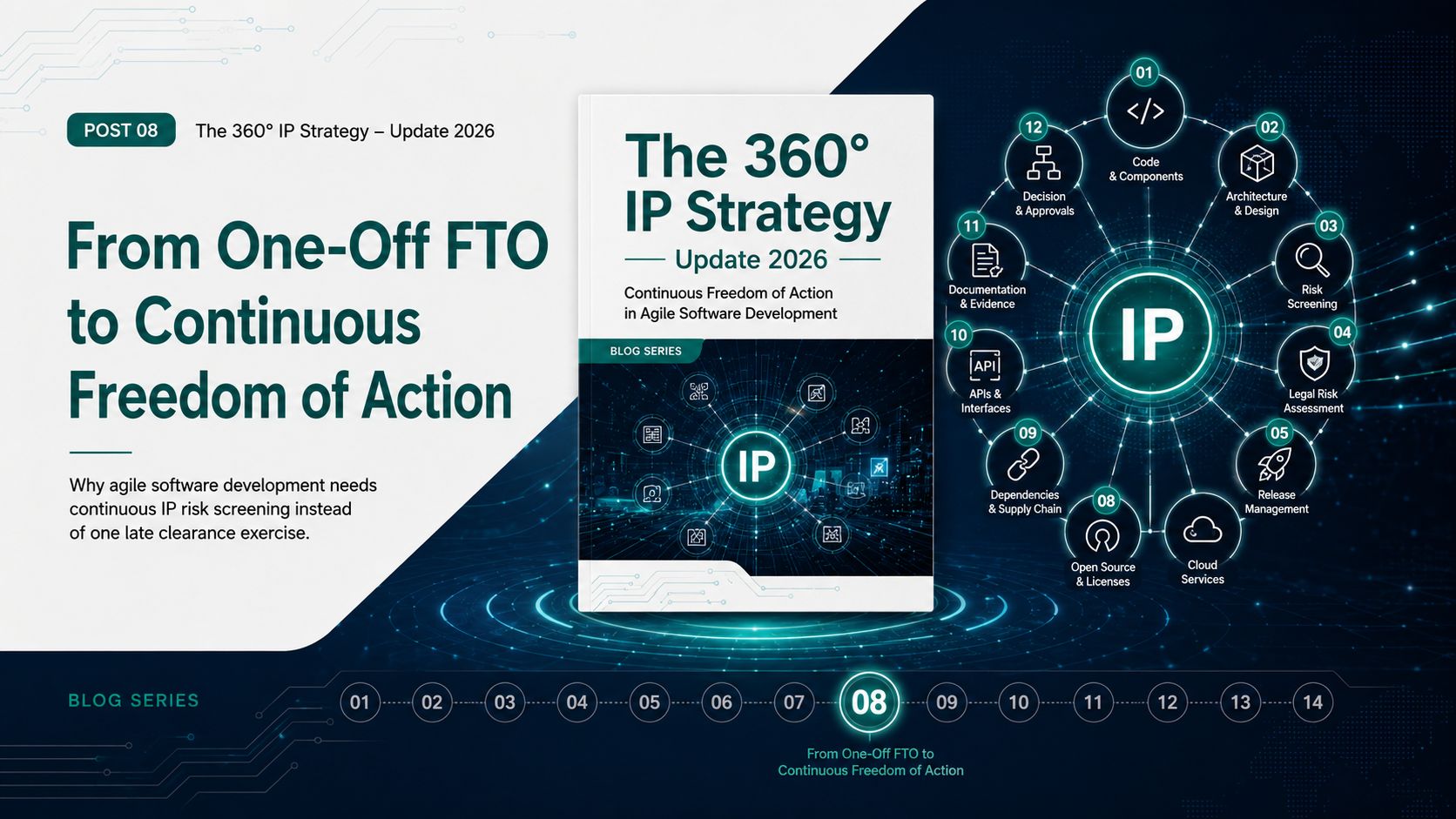
From One-Off FTO to Continuous Freedom of Action in Agile Software Development

The original 360° IP Strategy argued that freedom of action should accompany innovation from the first idea through development, launch and later product adaptation. That principle becomes even more important when an offering is continuously updated a ...

Read More
Pin it

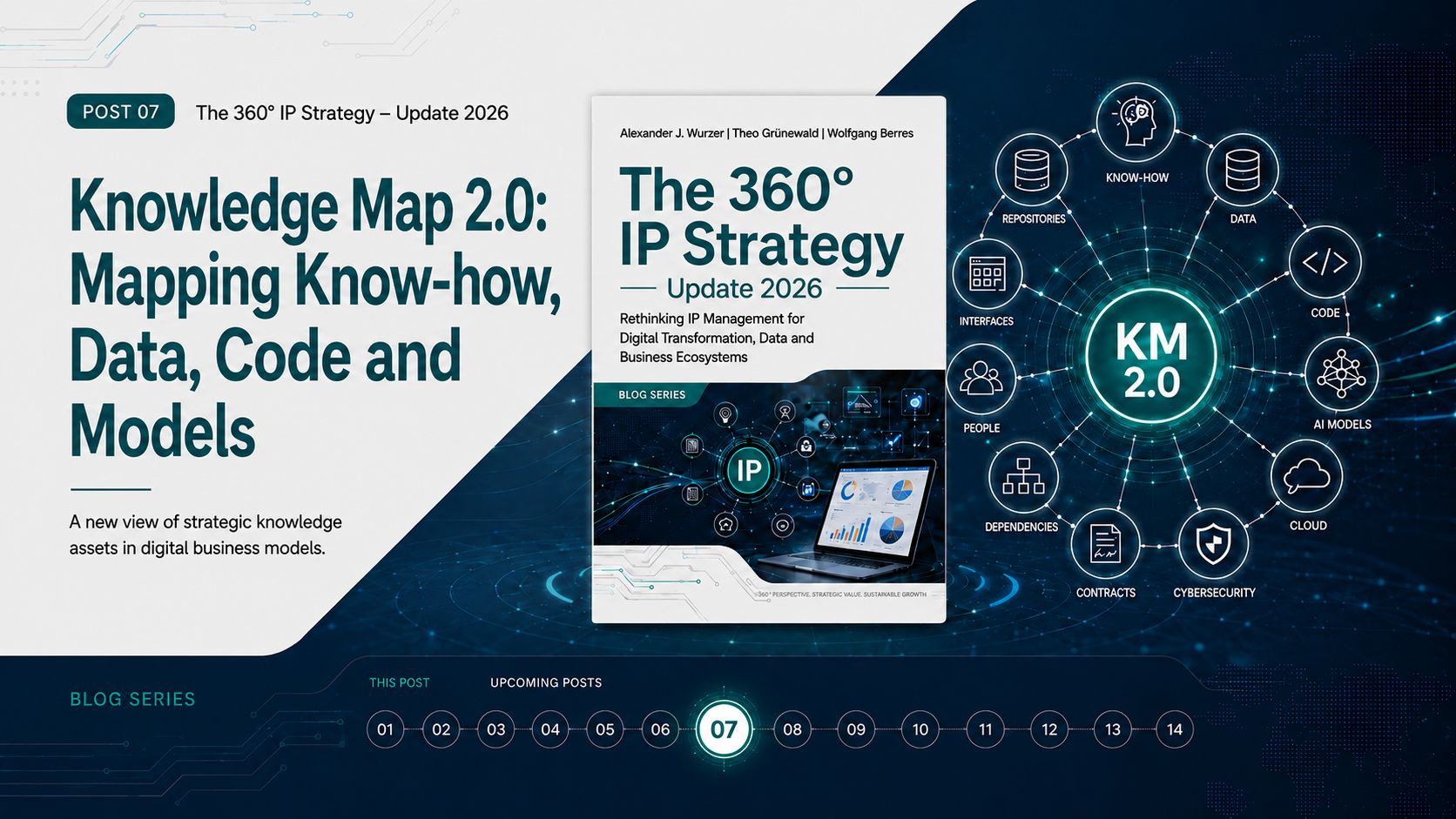
Knowledge Map 2.0: Mapping Know-how, Data, Code and Models

Knowledge Map 2.0 updates the original 360° IP Strategy for digital business models. Strategically relevant know-how no longer resides only in employees or technical documents, but also in source code, datasets, AI models, repositories, cloud environm ...

Read More
Pin it

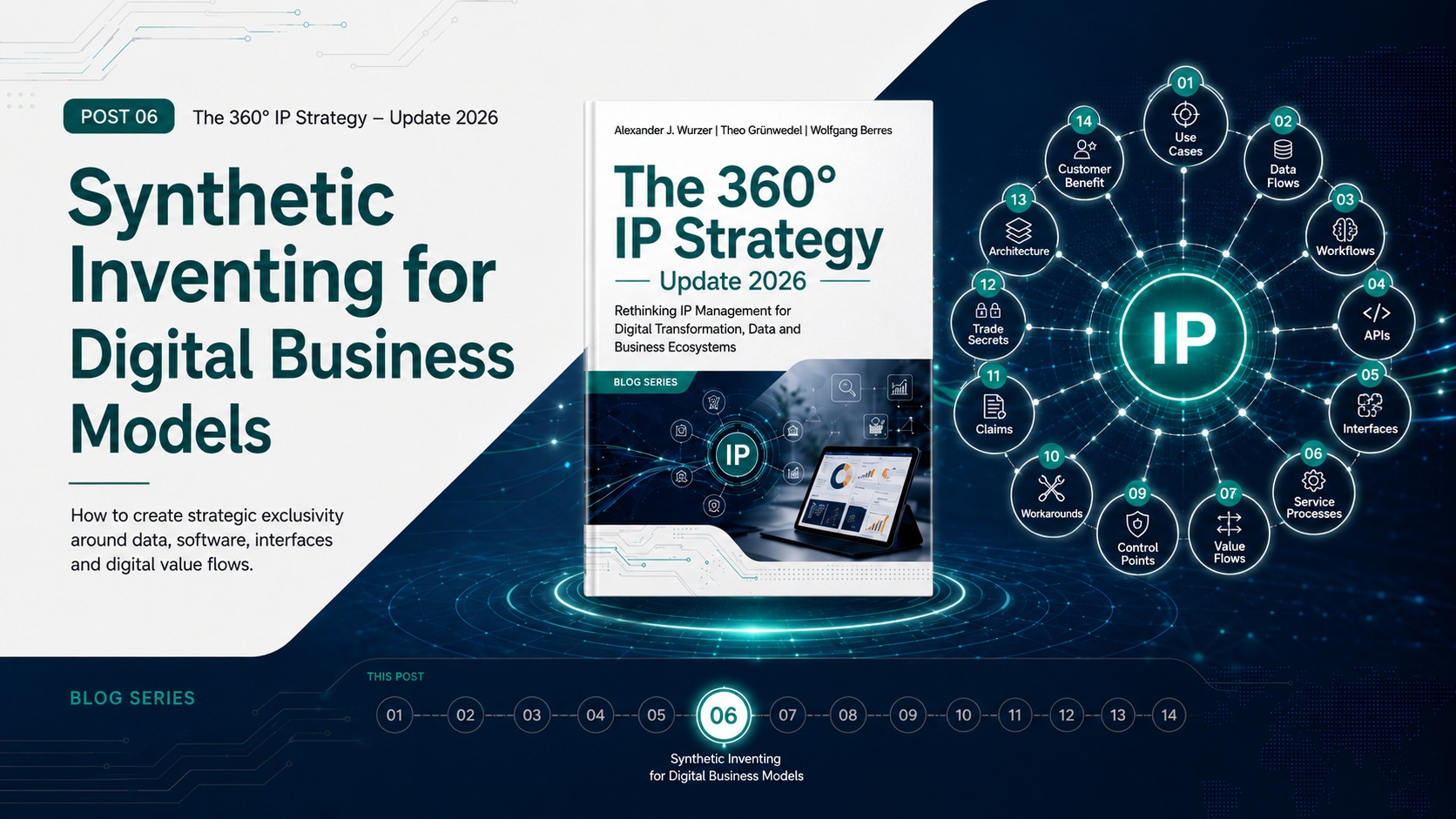
Synthetic Inventing for Digital Business Models

The original 360° IP Strategy made a demanding distinction between recognising a need for IP and creating the assets required to satisfy that need. A company may know that a customer-relevant advantage should be made exclusive, yet still lack the inve ...

Read More
Pin it

The New Target Matrix: Products, Services, Data Flows and Ecosystem Roles

The original 360° IP Strategy introduced the target matrix as the bridge between strategic IP thinking and the concrete logic of the business model. The 360° perspective structured what IP should achieve: control risks, suppress imitation, shape the m ...

Read More
Linkedin
×
Cart