
dIPlex Expert Pages – Making IP Subject Matter Experts Discoverable, Credible, and Actionable

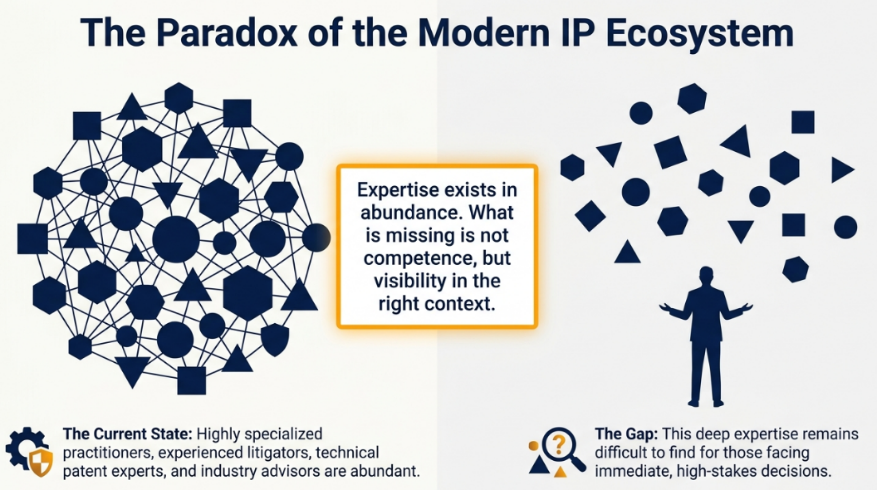
In many IP ecosystems, expertise exists in abundance. There are highly specialized practitioners, experienced litigators, technical patent experts, design specialists, licensing professionals, and advisors who understand very specific industries. Yet this expertise is often difficult to find for those who need it most. What is missing is not competence, but visibility in the right context.
Companies looking for guidance on specific IP challenges rarely search for generic services. They search for orientation around a concrete problem: trade secret litigation, enforcement in China, design protection, or software patents in MedTech. In these situations, they do not simply need a name, a CV, or a general firm profile. They need to understand who has a relevant perspective on the problem they are facing and why that expert is credible in this particular field.
The difficulty is therefore not finding information. The internet is full of information. The real difficulty is identifying the right expert at the right moment, in a format that connects the expert’s knowledge with the company’s immediate decision need. This is where dIPlex expert pages become essential.
Here is an explainer video about dIPlex Expert Pages
dIPlex expert pages transform how IP expertise is discovered and evaluated. They move beyond static profiles and create dynamic entry points into real problem spaces. For IP Subject Matter Experts, they offer a way to position their expertise in a way that is directly aligned with market demand. And for companies, they provide something that is often missing in IP management: a clear, structured path from problem to expert.
The Discovery Problem in IP
IP Subject Matter Experts build deep expertise over years. They publish, advise, and contribute to complex projects. Yet for potential clients, this expertise often remains invisible or disconnected from real decision situations.
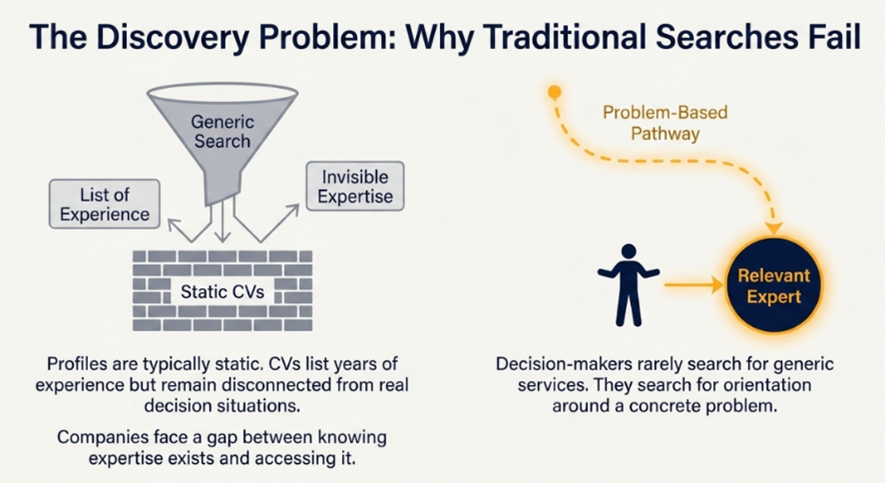
Profiles are typically static. CVs list experience, but they do not show how an expert thinks about a specific problem. Articles explain topics, but they are not always tied to a clear entry point for engagement. As a result, companies face a gap between knowing that expertise exists and being able to access it in a relevant, decision-oriented way.
dIPlex Pages as Structured Entry Points
A dIPlex expert page is not a profile in the traditional sense. It is a structured entry point into a specific IP problem space.
Each page:
- focuses on a clearly defined topic
- presents the expert’s perspective in a decision-relevant format
- connects content, context, and expertise
- enables users to understand both the issue and the person behind it
In this sense, a dIPlex page is not just a description of expertise. It is a positioning asset.
It allows companies to quickly assess whether an expert’s approach fits their situation.
From Visibility to Relevance
What distinguishes dIPlex pages from traditional online profiles is their focus on relevance. Instead of asking “Who is this expert?”, the page answers a different question: “How does this expert think about this specific problem?”
This shift is crucial.
It aligns the presentation of expertise with how decision-makers actually search for support. They do not start with names. They start with problems. By structuring expert pages around concrete topics, dIPlex creates a direct connection between demand and expertise.
Real Examples from the dIPlex
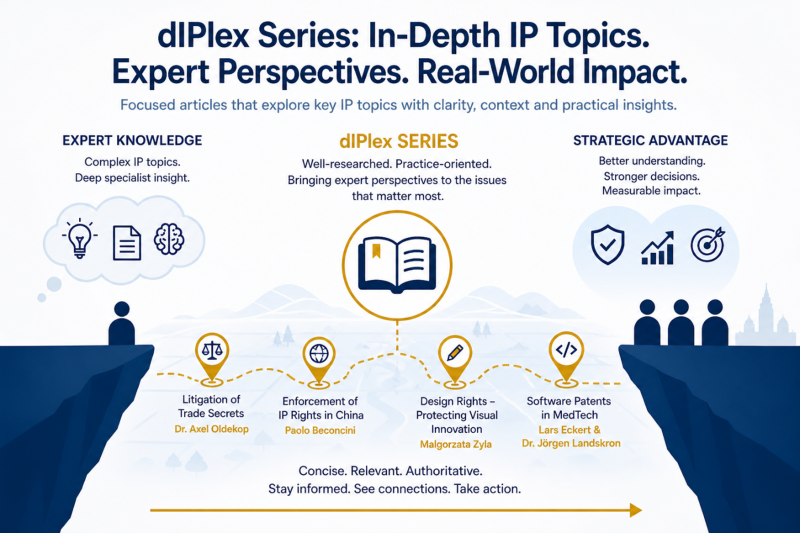
The digital IP Lexicon 🧭dIPlex includes numerous expert pages that illustrate this approach.
One example is the page by Dr. Axel Oldekop on litigation of trade secrets.
👉 https://profwurzer.com/diplex/docs/litigation-of-trade-secrets/
This page provides a structured perspective on how trade secret disputes unfold and what strategic considerations companies need to take into account. It allows decision-makers to quickly understand both the legal and practical dimensions of enforcement.
Another example is the contribution by Paolo Beconcini on enforcement of IP rights in China.
👉 https://profwurzer.com/diplex/docs/enforcement-of-ip-rights-in-china/
Here, the focus is on navigating a complex jurisdiction. The page translates local enforcement realities into actionable orientation for companies operating internationally.
Malgorzata Zyla’s page on design rights adds another dimension.
👉 https://profwurzer.com/diplex/docs/design-rights-protecting-visual-innovation/
It shows how visual innovation can be strategically protected and leveraged, making design a core element of competitive positioning rather than an afterthought.
Finally, the page by Lars Eckert and Dr. Jürgen Landskron on software patents in MedTech highlights a highly specialized field.
👉 https://profwurzer.com/diplex/docs/software-patents-in-medtech/
It connects regulatory, technical, and IP considerations, providing a structured view on a topic where decisions are particularly complex and high-impact.
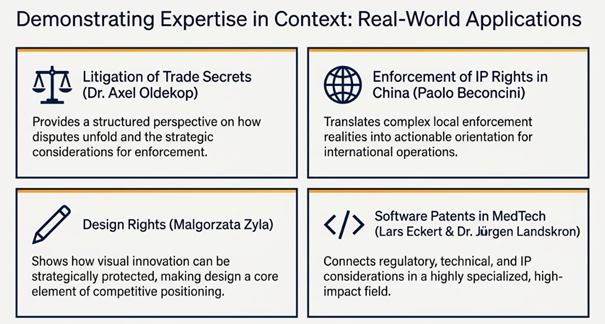
Across all these examples, the pattern is consistent. The page does not simply describe expertise. It demonstrates it in context.
Why dIPlex Pages Work
dIPlex pages are effective because they combine three elements that are rarely integrated:
- Context: a clearly defined problem space
- Content: structured insights that explain the issue
- Credibility: the expert behind the perspective
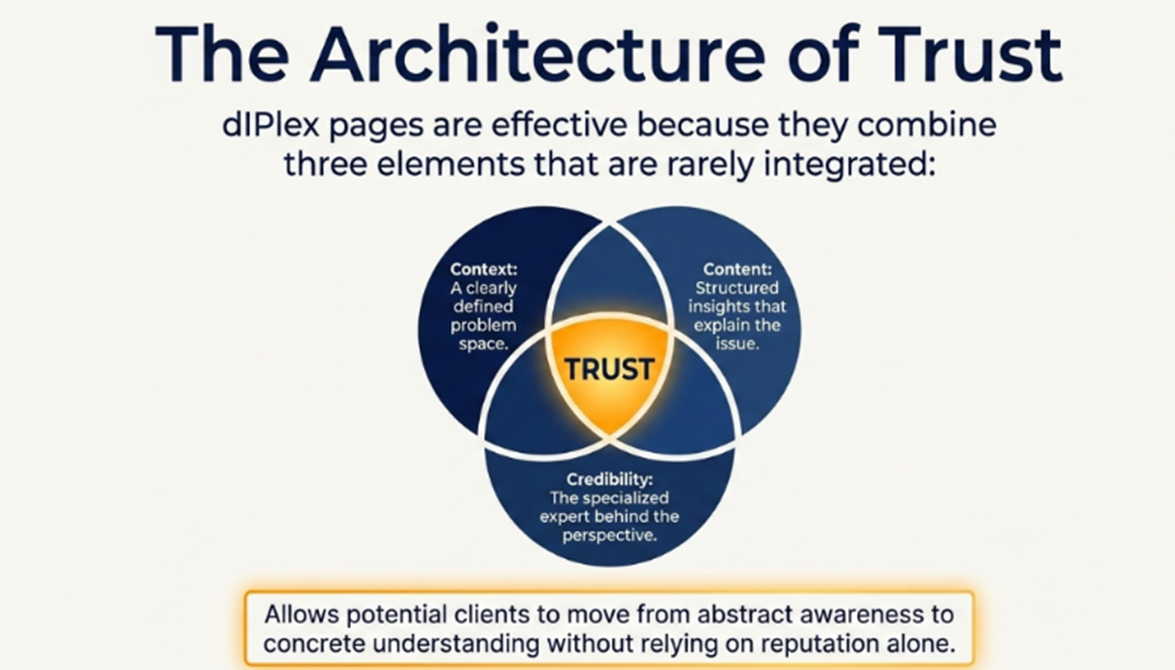
This combination creates trust. It allows potential clients to move from abstract awareness to concrete understanding. Instead of relying on reputation alone, they can evaluate how an expert approaches a problem.
Beyond the IP Bubble
Another key advantage of dIPlex pages is their accessibility. They are designed not only for IP professionals, but also for business decision-makers, engineers, and managers who interact with IP in their daily work. By translating complex topics into structured, topic-focused pages, dIPlex makes IP expertise accessible beyond the traditional IP community. This expands the reach of the IP Subject Matter Expert and opens new entry points for engagement.
The Role of the Platform
Within the broader dIPlex ecosystem, expert pages are connected to other formats:
- whitepapers and playbooks for strategic orientation
- checklists for operational execution
- glossary entries for conceptual clarity
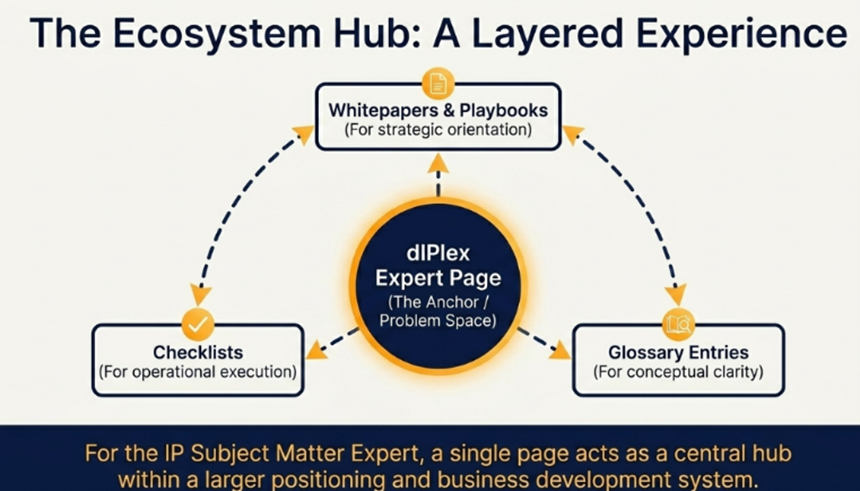
This creates a layered experience where users can navigate from a specific problem to deeper insights and practical tools.
For the IP Subject Matter Expert, this means that a single page can act as a hub within a larger positioning and business development system.