GreenTech as driver of economic growth 🎯 IP Management Pulse #62


Subscribe for compact, in-depth IP intelligence: trends, cases, and research curated by the team of the IP Business Academy and the IPBA Connect Platform. Get practical playbooks for positioning, LinkedIn, and business development. Learn from leading experts in the context of business models and R&D. Join the IPBA Connect community and turn IP knowledge into results — with dIPlex, live formats, IPBA Connect, and white papers as your launchpad.
Here you can find the latest issues in the archive and also subscribe. A fresh read with all important IP Management content will be sent to the subscribers every second Thursday at 7:00 (CET), so that they can start the day informed.
The next newsletter will cover the following topics:
GreenTech as driver of economic growth
A recent report published by the UK-based thinktank CBI Economics shows the growing importance of the GreenTech sector for the UK labor market as well as for the attraction of new investment money. Specifically, this technology-intensive sector is in demand of highly qualified workers, who earn more than employees in many other industries. Both of those facts show that GreenTech is critical not only for saving the planet, but also for protecting economic prosperity. And the basis for this protection is always IP, particularly patents on green technologies.
IPOs in digital MedTech
Current news indicate that the European wearables manufacturer Oura is taking concrete steps for an IPO in the USA. This move may be the result of their expansion into the MedTech sector, which is supported by a broad range of new digital health-related services that are offered via subscription. To make this shift to new services and revenue models sustainable, also the IP foundation needs to be constantly reviewed and updated. Only this way, investor confidence can remain high.
Patent mediation and arbitration
While the Unified Patent Court (UPC) allows already for a few years to engage in multinational patent litigation in its member states, since 2nd June the establishment of the Patent Mediation and Arbitration Centre (PMAC) additionally enables alternative dispute resolution options. This gives companies a broader range of instruments to resolve its pan-European conflicts.
University-industry partnerships
The maturing of new technological sectors often takes both a high degree of academic ingenuity as well as entrepreneurial spirit. One way to combine them are university-industry partnerships, such as the cooperation between EPFL and Quantinuum in the quantum computing space. The cooperation enables researchers to test various use cases for quantum computing, which may in the end also have commercial potential in the market, potentially leading to the creation of new business areas.
OFB Trend Radar
The Trend Radar of the Open Foresight Program is a structured foresight tool that identifies and visualizes emerging developments shaping corporate IP management. It is created as a result of a study among in-house IP experts, in which researchers systematically collect feedback, weight its relevance, and synthesize it into key trend areas.
Its purpose is not prediction, but orientation: helping organizations understand complex changes, prioritize what matters, and align IP strategies with evolving technological, geopolitical, and business environments. By translating diverse insights into a clear framework, the Trend Radar enables more informed, forward-looking decision-making in corporate IP management.
When the system is missing, the expertise stays invisible

Mid-sized IP firms often do not lack positioning, but a system that makes their expertise visible. Marketing is usually scattered across partner initiatives, posts, conferences and website updates, creating activity without cumulative market impact. The article argues that firms need a lean market presence system: clear audiences, owned topics, realistic formats, sustainable rhythm and governance. Partners should not become content producers; they should provide expert judgement, while a translation layer turns their insights into market-facing output. Effective marketing must connect directly to business development, making the firm’s expertise recognizable before client meetings happen.
When Technology and IP Become Boardroom Questions: What the CTO Spring Forum 2026 Revealed About AI and IP Leadership with Dr. Diana Taubert
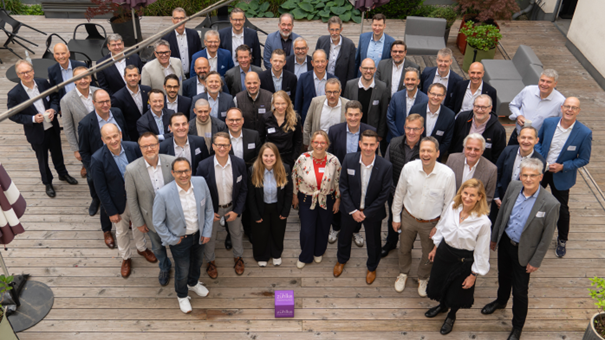
The CTO Spring Forum 2026 showed that AI, humanoid robotics and IP communication are becoming core leadership topics for technology companies. AI is no longer just a tool, but an organizational transformation affecting R&D, decision-making and leadership. Humanoid robotics illustrates the shift from component thinking to systems thinking, where hardware, software, data and services interact. In this environment, IP must move beyond legal protection and become understandable at board level. The article argues that CTOs need to translate technological complexity into IP strategy, market position and competitive advantage, making IP part of modern technology leadership.
Evolving IP Strategy with Corporate Transformation
 This podcast episode presents Laerdal Medical as a case study for mission-driven IP management in MedTech. It shows how IP can support not only protection, but also innovation, differentiation, partnerships, quality assurance, and business growth. Laerdal connects patents, trademarks, designs, know-how, and trade secrets directly to its purpose of helping save lives. The episode also explains how digitalization changes IP strategy: sensors, data-driven training, platforms, and connected services require protection of ecosystems, user experience, data, and value chains. The key message is that modern IP management must be embedded early and systematically into innovation processes.
Patents and Pricing Power: New Evidence from Consumer Products
The article “Patents and Supra-Competitive Prices: Evidence From Consumer Products” shows that patents can create measurable pricing power in consumer markets. Based on Amazon product data, prices fell by 8–10% after patent expiry. For IP management, this means patents should be connected to products, pricing, lifecycle planning and competitive strategy, not managed only as legal rights.