CEIPI IP Business Talk with Chris de Mauny: Building a European UPC Litigation Strategy


The Unified Patent Court is no longer a new institution in European patent litigation. It is becoming a central part of the strategic environment in which international companies enforce patents, defend market positions and prepare for disputes across Europe. Forum selection, litigation timing, preliminary injunctions, parallel validity proceedings and territorial reach can now influence business decisions well before proceedings actually begin.
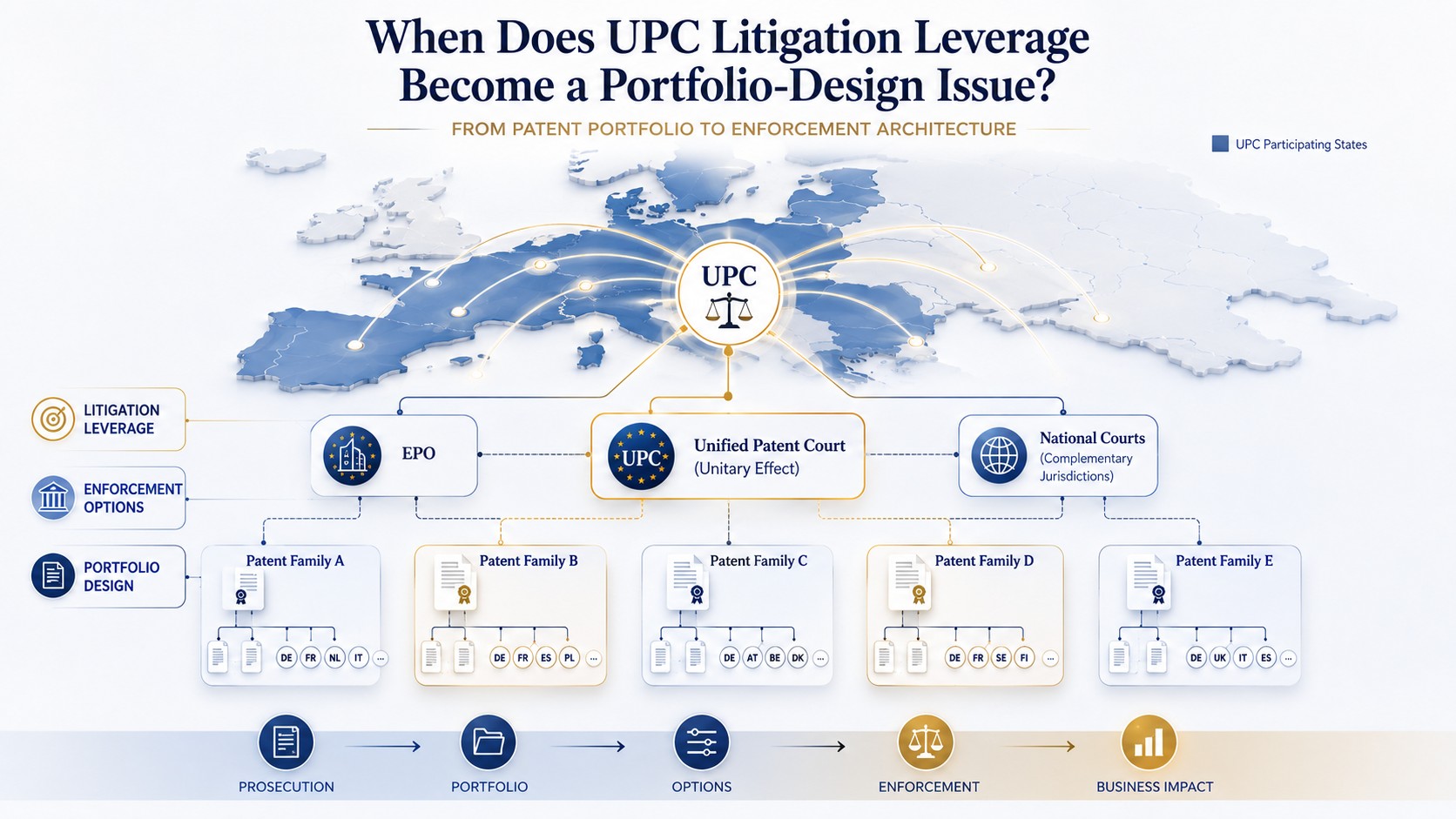
That is why the next CEIPI IP Business Talk will focus on a core challenge for international companies operating in Europe: how should European patent litigation be structured when the UPC, national courts and European Patent Office proceedings may all form part of the same strategy?
On 19th August, at 12:00 CEST, Chris de Mauny from Bird & Bird will join us for a 45-minute CEIPI IP Business Talk on: Building a European UPC Litigation Strategy. Registration here
Building a European UPC Litigation Strategy
The UPC has moved rapidly from a newly established court to an important venue for European patent disputes. Centralised infringement proceedings, revocation actions, provisional measures and the possibility of remedies covering multiple European markets create opportunities that did not exist under the traditional system of national patent litigation.
But this also makes litigation strategy more complex. Companies need to consider not only whether they have a strong infringement or invalidity claim, but where proceedings should take place, how quickly they may develop, which other proceedings may run in parallel and what commercial consequences a decision could have across European markets.
The upcoming CEIPI IP Business Talk with Chris de Mauny will therefore look at the UPC from the perspective of companies that need to prepare and coordinate European patent litigation strategically.
From national litigation to forum strategy
One of the first questions in a European patent dispute is increasingly no longer simply whether to litigate, but where. Before the UPC, European patent litigation was largely organised through national courts. Companies selected jurisdictions according to market importance, procedural advantages, available remedies, litigation costs and the location of alleged infringement. The UPC introduces another layer of choice because a single proceeding can potentially have consequences across several participating states.
This means forum selection can become closely connected to commercial objectives. A patent holder seeking rapid and geographically broad enforcement may evaluate the UPC differently from a company pursuing a targeted dispute in one important national market. Defendants, in turn, need to understand where they may be exposed and how different litigation routes affect their ability to respond.
Even within the UPC system, the choice of division may matter. Litigation experience, procedural circumstances, the location of infringement and the strategic objectives of the parties can all become part of the analysis.
The broader implication is that European litigation strategy can no longer be treated as a sequence of isolated national decisions. Companies need to understand the relationship between the available forums and decide which combination best supports their commercial position.
Litigation readiness in a faster system
Forum choice is only part of the challenge. Timing can be equally important. UPC proceedings can develop quickly, particularly where provisional measures are sought. For companies preparing a major European product launch, the possibility of an injunction can therefore become a business risk long before ordinary litigation would traditionally have reached a decisive stage.
This changes what litigation readiness means. Patent holders considering enforcement need to understand their evidence, infringement position, validity arguments and commercial objectives before approaching the court. Potential defendants may need to assess relevant patents, develop validity positions, preserve technical evidence and coordinate internal decision-makers before a dispute formally begins.
The same applies to market entry. A company launching a new product across several European countries may no longer be preparing for separate litigation risks in individual markets. A single UPC action can create a broader exposure. Litigation preparation therefore becomes part of launch preparation. Legal teams, technical experts and business decision-makers need to know how they will respond if proceedings begin quickly and which strategic options remain available once they do.
Coordinating UPC and EPO proceedings
European patent disputes also create another layer of complexity because litigation before the UPC may develop alongside validity proceedings before the European Patent Office. An EPO opposition and a UPC action can examine the same patent through different procedures, on different timelines and potentially with different outcomes. The existence of parallel proceedings therefore raises strategic questions for both patent holders and challengers.
A company cannot simply assume that the outcome in one forum will determine the outcome in the other. Litigation strategy needs to anticipate how arguments concerning validity are developed and coordinated across proceedings, how procedural timing affects the dispute and what happens if different institutions reach different conclusions.
This is particularly important where the commercial stakes are high. A UPC decision may have immediate consequences for infringement or enforcement, while opposition proceedings may continue to determine the longer-term validity or scope of the patent.
For international businesses, the challenge is therefore not only managing individual proceedings successfully. It is maintaining a coherent position across a European litigation environment in which court proceedings and validity challenges may interact without necessarily moving in parallel.
The expanding territorial reach of the UPC
The territorial dimension of the UPC creates another strategic question. The UPC system is based on participating EU Member States, but recent jurisdictional developments have raised important questions about whether UPC decisions concerning European patents may also address infringement in countries outside the UPC system under certain circumstances.
The United Kingdom is particularly significant in this discussion. Although it does not participate in the UPC, European patents may cover both UPC territories and the UK. If UPC jurisdiction can under specific conditions extend to disputes involving non-UPC parts of a European patent, the strategic significance of a UPC action becomes broader than the boundaries of the participating states alone.
For international companies, this could affect how litigation is coordinated across Europe. Decisions about where to sue, where to defend, how different national rights are combined and how parallel proceedings are managed may increasingly need to take account of this evolving jurisdictional landscape.
The issue illustrates a broader development. The UPC is not simply replacing parts of national litigation. It is creating new relationships between European and national proceedings that companies need to understand when designing an overall enforcement or defence strategy.
The upcoming CEIPI IP Business Talk with Chris de Mauny will therefore address one of the most practical questions created by the new European patent litigation environment: how can international companies coordinate forum selection, litigation readiness, validity proceedings and territorial strategy into a coherent European approach?
Chris de Mauny
Chris de Mauny is a Partner at Bird & Bird and co-head of the firm’s San Francisco office. He is a patent litigation specialist, qualified as a barrister in England and Wales and registered as a Foreign Legal Consultant with the State Bar of California.
His work focuses particularly on patent disputes with an international dimension and on helping businesses understand how European litigation options fit within their broader commercial and litigation strategies.
This includes questions concerning proceedings before the Unified Patent Court, coordination with national litigation and European Patent Office proceedings, provisional measures, litigation readiness and the developing territorial reach of the UPC.