
Design-Driven Innovation in Green Technologies and the Role of IP: CEIPI MIPLM Modul 5 in 2026

This post is based on a lecture delivered on April 23, 2026, as part of the Master of Intellectual Property Law and Management (MIPLM 2025/26) program. The session was part of Module 5 and focused on the concept of Design-Driven Innovation, following the framework developed by Prof. Roberto Verganti.
The lecture explored how innovation can be understood not only as technological advancement or market response, but as a deliberate shift in the meaning of products. It provided the conceptual foundation for analyzing how sustainability increasingly acts as a driver of such meaning shifts and how this transformation affects the strategic role of intellectual property.
Here you find the 🔎IP Management Glossary entry on Design Driven Innovation
Innovation Begins When Meaning Shifts
Innovation is often framed as a question of technology or market demand. Companies invest in R&D, optimize performance, and respond to customer needs. Yet, as Prof. Roberto Verganti’s concept of Design-Driven Innovation shows, the most transformative innovations emerge elsewhere: in the meaning of products.
Products are not just functional solutions. They are cultural artifacts that express values, identities, and ways of living. When their meaning changes, markets are redefined, new behaviors emerge, and entire industries shift.
This is particularly visible in the context of sustainability. What we are witnessing today is not merely the adoption of greener technologies. It is a deeper transformation in how products are understood, used, and valued. Sustainability is not only improving what products do. It is changing what they stand for.
The lecture from the MIPLM module makes this explicit: Design-Driven Innovation is about radically innovating what things mean. And sustainability is becoming one of the strongest forces driving exactly this kind of transformation.
From Function to Meaning: The Hidden Layer of Innovation
To understand this shift, it helps to step back and look at how products evolve over time. The lecture illustrates this with the example of photography. Early cameras were complex devices operated by experts, used only in exceptional situations. Over time, they became simple tools for capturing everyday life. The technological change mattered, but the real breakthrough was a change in meaning: photography became a social practice.
This distinction is essential. Technology enables change, but meaning defines adoption.
The same logic applies across industries. A lamp is not just a lighting device. It shapes atmosphere, identity, and emotion. A bookshelf is not just storage. It becomes a statement of creativity and personality. Design, therefore, is not about form alone. It is about interpreting and shaping the meaning of objects in a given context. The example of the “Bookworm” by Kartell illustrates this evolution.
Once this perspective is adopted, sustainability can no longer be treated as a technical add-on. It must be understood as a transformation of meaning.
Sustainability as a Redefinition of Products
For a long time, sustainability has been approached through efficiency: reducing emissions, minimizing waste, and optimizing resource use. These are important steps, but they remain within a functional logic. They improve products without fundamentally redefining them.
Design-Driven Innovation takes a different approach. Sustainability becomes embedded in how products are conceived from the beginning, rather than added later. This shifts the focus from performance to purpose.
Consider mobility. The car was historically a symbol of status, ownership, and personal success. Today, this meaning is being replaced. Mobility is increasingly understood as access, flexibility, and integration into broader systems. Car-sharing services, subscription models, and micro-mobility solutions reflect this shift. The product is no longer the car itself. The product is mobility as a service.
A similar transformation can be observed in consumer goods. Reusable packaging, repairable devices, and circular products are not only functional improvements. They communicate responsibility, awareness, and participation in a broader ecological system. Consumers do not only buy a product. They buy into a meaning.
Even entire industries are redefined through this lens. Air travel, once associated with exclusivity and prestige, has become accessible and commoditized. Communication technologies have moved from elite tools for business to universal infrastructures for everyday life.
Sustainability now pushes a similar transformation, redefining what is considered normal, desirable, and valuable.
From Products to Systems: The Expanding Context of Meaning
Another key insight from the lecture is that meaning is always linked to context. Products do not exist in isolation. They are embedded in usage scenarios, environments, and systems.
The evolution of the mobile phone illustrates this clearly. Initially designed for communication, it has become a multifunctional interface connecting navigation, traffic management, social interaction, and data ecosystems. Its meaning has expanded far beyond its original function.
Sustainability accelerates this trend. Products increasingly become nodes within larger systems. Energy devices connect to smart grids. Mobility solutions integrate into urban infrastructure. Consumer products are embedded in circular supply chains.
This has profound implications. The value of a product no longer lies solely in its standalone performance, but in its role within a system. Its meaning is defined by how it interacts with other elements.
For companies, this means that innovation cannot be limited to product development. It must include system design. And for IP, this creates a shift from protecting individual assets to managing complex ecosystems.
The Transformation of IP: From Protection to Interpretation
When meanings change, intellectual property strategies must evolve accordingly. Traditional IP approaches focus on protecting technical inventions or specific product features. This logic works well in a world where differentiation is based on performance and functionality.
In a design-driven world, however, competitive advantage increasingly lies in meaning. What matters is not only what a product does, but what it represents and how it is perceived.
This expands the scope of IP. Trademarks, design rights, and branding systems become central tools for capturing and protecting meaning. They define identity, signal values, and shape user expectations.
 For example, companies like Patagonia protect not only product features but also their sustainability narrative through strong trademark positioning and consistent communication. The value lies as much in the meaning of the brand as in the products themselves.
Here you find an 🏭Industry Insight 📑IP Management Letter on Patagonia: Leading the Way in Green Fashion.
Similarly, IKEA’s approach to circular design is not only about product construction but about a broader meaning of affordability, sustainability, and democratic design. This is reinforced through design protection, brand architecture, and ecosystem control over product use and reuse.
At the same time, IP must operate at a system level. As products become part of interconnected ecosystems, value shifts to interfaces, platforms, and data structures.
Tesla provides a compelling example. While it holds a large patent portfolio, its strategic move to open certain patents was not a loss of control, but a way to shape the meaning of electric mobility as an industry standard and accelerate ecosystem adoption. Here, IP is used not only to exclude, but to influence how a market evolves.
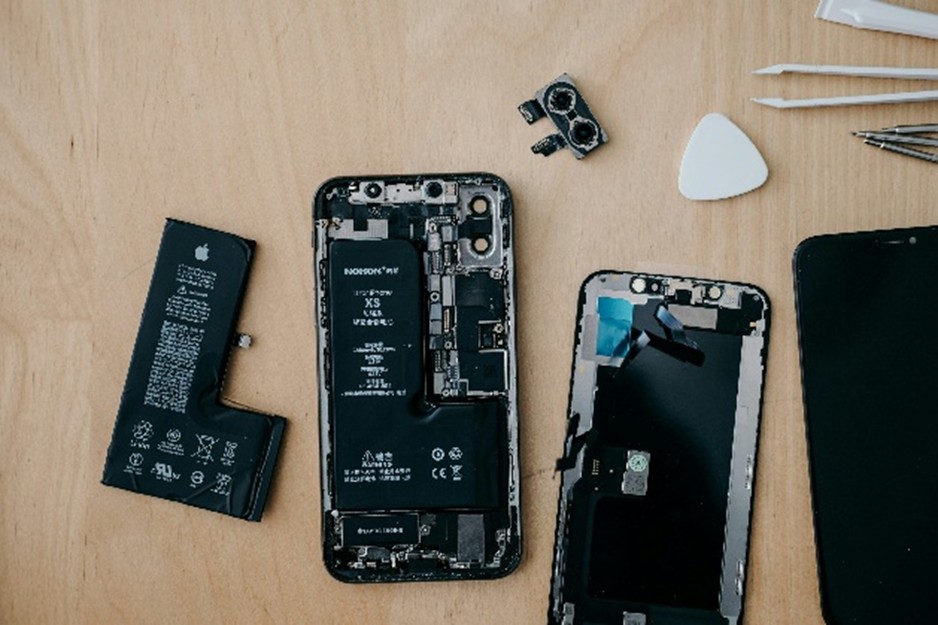 Another example can be found in circular economy platforms. Companies that manage repair networks, refurbishment systems, or recycling infrastructures increasingly rely on IP not only to protect technologies but to control participation rules within the ecosystem. The IP defines who can access, modify, and reuse products, thereby shaping the system itself.
Perhaps most importantly, IP management must become dynamic. If meanings evolve, IP portfolios cannot remain static. Companies need to continuously monitor how their products are perceived and adapt their protection strategies accordingly. This aligns with the idea that IP is not a one-time legal exercise, but an ongoing process embedded in business strategy.
Competing in a World of Changing Meanings
The shift toward sustainability makes Design-Driven Innovation more relevant than ever. It forces companies to move beyond incremental improvements and engage with deeper questions. What does our product mean in a changing world? What role does it play in society? How does it align with emerging values?
These questions cannot be answered by technology alone. They require interpretation, vision, and the ability to anticipate cultural shifts.
Companies that succeed in this environment are not necessarily those with the most advanced technologies. They are those that understand how to shape meaning. They redefine categories, create new expectations, and build connections with users that go beyond functionality.
For IP, this changes the rules of the game. Protection must follow meaning. It must capture not only what is invented, but what is signified. It must operate across products, systems, and narratives.
In this sense, IP becomes part of a larger strategic capability: the ability to translate innovation into meaning, and meaning into defensible competitive advantage.