From Engines to Uptime: What Power by the Hour Teaches IP Managers About Industrial IoT at CEIPI MIPLM

In the Master Program for IP Law and Management, business models are not treated as a management fashion. They are treated as the bridge between technical inputs and economic outputs. This bridge is essential for IP management. A technology does not create value in the abstract. It creates value only when it is embedded in a business model that defines who the customer is, what problem is solved, how the offering is paid for, which partners are needed, where costs arise and how advantage is maintained.
This becomes especially important in Industrial IoT. Connected machines, sensors, data streams, analytics platforms and digital twins do not automatically create business value. They create options. Whether these options become profitable businesses depends on the underlying model of value creation and value capture. For IP strategy, this means that it is not enough to ask whether a device, algorithm, interface or technical feature can be protected. The more important question is how the connected system creates economic control.
The Rolls-Royce Power by the Hour model is a strong teaching case for this point. It shows how a jet engine can be transformed from a high value industrial product into the basis of a data based service business. The engine remains a highly sophisticated technical asset. But the business logic changes. The customer does not only buy metal, materials and certified propulsion technology. The customer pays for availability, predictable cost and lifecycle support.
From Product Sale to Performance Business
In a traditional engine sale model, the customer buys an aircraft engine and later organizes maintenance, spare parts, repairs and overhaul. The manufacturer may still earn substantial aftermarket revenue, but the basic business logic remains product centered. The engine is sold, installed and operated by the airline or aircraft owner. The manufacturer protects the technical features of the engine and supports the installed base through parts, documentation, repair procedures and technical assistance.
Power by the Hour changes this relationship. Under this model, the airline pays according to engine use, typically linked to flying hours. The manufacturer remains involved throughout the lifecycle and assumes a much broader role in maintenance planning, engine health monitoring, repair management and risk allocation. The customer value proposition changes from “buy a superior engine” to “receive dependable propulsion performance with predictable lifecycle economics”.
This is not merely a pricing innovation. It is a business model transformation. The economic object is no longer the engine alone. The economic object is the performance system around the engine.
Why This Is an Industrial IoT Case
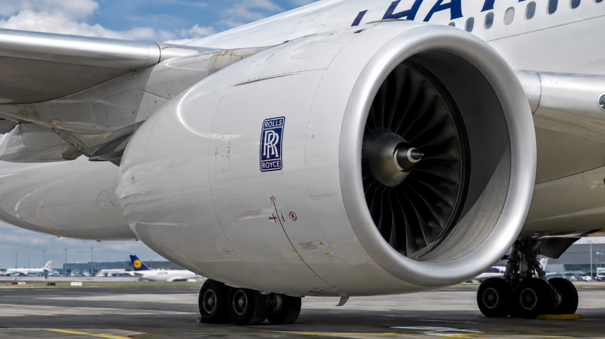
Industrial IoT is often described through its visible technical components: sensors, connected machines, data capture, cloud systems, analytics and digital twins. But from a business model perspective, these elements matter because they make new forms of value creation possible.
In the Rolls-Royce case, engine health monitoring turns operational data into maintenance intelligence. Data from engines in use can indicate wear, performance shifts, vibration patterns, temperature deviations or early signals of component degradation. When these data points are combined with engineering knowledge and fleet experience, maintenance can move from reactive repair to planned intervention.
The connected engine becomes a continuous source of knowledge. It generates information during operation. That information supports diagnostics and prognostics. Analytics improve maintenance planning. Better maintenance planning increases availability and reduces operational disruption. The contract then monetizes this improved availability through usage based payments.
This is the essence of Industrial IoT as a business model. The connected product becomes a gateway to lifecycle services.
Why IP Strategy Must Follow the Business Model
The key lesson for IP managers is that the IP strategy must match the business model. If the company sells engines, the IP strategy will naturally focus on product differentiation and aftermarket position. Patents may protect turbine designs, materials, coatings, compressor architecture, cooling systems, control technologies and manufacturing processes. Trade secrets may protect design rules, testing knowledge, simulation models, materials recipes, repair know-how and production expertise. Copyright and confidentiality may protect manuals and service documentation. Trademarks support reputation and trust.
This is a strong IP strategy for a product based model. But it is not sufficient for a performance based Industrial IoT model.
In Power by the Hour, the decisive IP question is broader. The company must control the whole performance system. This includes engine technology, but also data rights, diagnostic models, software tools, digital twin structures, repair documentation, maintenance procedures, MRO licensing, supplier contributions, improvements and contractual audit rights. IP is no longer only a shield around the product. It becomes part of the operating architecture of the service business.
Data Rights Become Strategic
Data is central in Industrial IoT, but data is not valuable simply because it exists. It becomes valuable when it can be accessed, interpreted, combined and used for decisions. In Power by the Hour, engine data helps forecast maintenance needs, plan shop visits, improve algorithms, reduce downtime and price long term risk.
This raises several IP and contractual questions. Who may access operational engine data? Who may store it? Who may analyze it? Can the manufacturer use customer specific data to improve fleet wide models? Who owns derived insights? Can suppliers or maintenance partners access selected data? How is airline confidentiality protected?
These questions cannot be answered by patent law alone. They require a mix of contract design, data governance, confidentiality, trade secret management, software protection, cybersecurity and operational process control. That is exactly why business model literacy is essential. Without understanding how data supports the revenue model, IP managers may protect the wrong things or ignore the rights that actually make the service profitable.
Digital Twins and Predictive Maintenance as IP Assets
Digital twins and predictive maintenance models are often presented as technological innovations. In an Industrial IoT business model, they are also economic assets. They connect physical product behavior with service decisions and financial outcomes.
A digital twin of an engine or component can help simulate degradation, estimate remaining useful life and optimize maintenance schedules. Predictive models can help identify failure signatures and determine when intervention is economically and technically justified. These tools influence uptime, shop visit cost, spare parts planning and customer satisfaction.
For IP strategy, this means that protection must cover more than the original hardware invention. It must include the data models, software, algorithms, training data, diagnostic rules, maintenance logic and accumulated experience that make the digital service effective. Much of this may be protected better through trade secrets, access control, contractual restrictions and technical security than through patents.
Maintenance Know-how Becomes Part of the Value Proposition
In the traditional product model, maintenance is often treated as a support function or aftermarket revenue source. In Power by the Hour, maintenance becomes part of the core customer promise. If the manufacturer is paid for flying hours and availability, maintenance quality directly affects revenue and margin.
This changes the IP role of service documentation, repair procedures and tooling. They are no longer merely support materials. They become control instruments for safety, quality, cost and risk. Authorized repair routes, documentation updates, MRO licenses, inspection procedures and repair approvals must be governed carefully because they determine whether the performance promise can be delivered.
This is also where Industrial IoT changes the boundary of the firm. The manufacturer must coordinate airlines, MRO providers, suppliers, digital infrastructure partners and internal engineering teams. IP strategy must define who may use which knowledge, under which conditions and with which feedback obligations.
Business Planning and IP Cannot Be Separated
The MIPLM lecture logic makes this especially clear through the business plan perspective. A business plan is not only a document for investors. It is a tool for thinking through the business. It asks what is offered, to whom, why customers buy it, how it is produced and delivered, how the company is organized, how it is financed and how the money machine works.
In the traditional engine sale model, the business plan focuses on development cost, certification, production, sales, installed base growth, spare parts revenue and aftermarket services. IP supports differentiation, freedom to operate, product protection, brand trust and aftermarket control.
In Power by the Hour, the business plan must address a different economic logic. Revenue is recurring and usage based. Costs include long term maintenance obligations, shop visits, spare parts provisioning, data infrastructure, analytics, global service operations and risk reserves. The model depends on assumptions about flying hours, time on wing, failure rates, repair cost, utilization and contract duration.
This means IP must be embedded in the business plan from the beginning. Data rights, digital monitoring, software control, documentation access, supplier rights, improvement ownership and MRO licensing directly affect cost, risk and revenue. Weak IP governance is not only a legal problem. It can become a margin problem.
The Teaching Lesson for IP Managers
The Power by the Hour case teaches a broader lesson for Industrial IoT. Connected products do not only require more patents. They require better understanding of the business model.
If the business model is based on selling a product, IP protects the product and supports the aftermarket. If the business model is based on availability, IP must structure the entire availability system. If the business model is based on data based services, IP must govern data access, analytics, software, digital twins and derived knowledge. If the business model depends on ecosystem partners, IP must organize collaboration, access rights, improvements and auditability.
For IP managers, the starting point is therefore not the invention disclosure. The starting point is the business model. Only when the money machine is understood can the right IP control points be identified.
Rolls-Royce’s Power by the Hour model shows this clearly. The engine remains central, but value is created through a connected system of physical performance, operational data, predictive maintenance, contractual risk transfer and lifecycle service capability. IP strategy must follow that system.
The central insight for MIPLM students is simple: in Industrial IoT, IP does not merely protect technology. It protects the way technology becomes a business.
Here you will find an 🏭Industry Insight 📑IP Management Letter on this case: From Metal to Metrics – IP Strategy Behind Rolls Royce’s Performance Contracts.
Sources Used:
Rolls-Royce – TotalCare®: The story behind Power-by-the-Hour
Offizielle Rolls-Royce-Seite zur Entstehung und Logik von TotalCare® / Power by the Hour, inklusive Zahlung pro Engine Flying Hour und Risikoübertragung.
https://www.rolls-royce.com/media/our-stories/discover/2017/totalcare.aspx
Rolls-Royce – TotalCare services
Offizielle Rolls-Royce-Seite zu TotalCare mit Hinweisen auf predictive maintenance planning, workscope creation, overhaul, repair, risk transfer, engine health monitoring und product durability improvements.
https://www.rolls-royce.com/products-and-services/civil-aerospace/services/totalcare.aspx
Rolls-Royce / PHM Society – Engine Health Management: From Data to Decisions
Technischer Hintergrund zu Engine Health Management mit den Schritten Sense, Acquire, Transfer, Analyze und Action sowie Fleet Knowledge und Operations Room.
https://phmsociety.org/wp-content/uploads/2009/06/FieldedSystems_Calhoun.pdf