Deep Tech IP Strategy: How IP Management Evolves from Scientific Discovery to Market Growth with Dr. Alihan Kaya

A scientific breakthrough can open an entirely new field of opportunity. Building a viable business around it requires decisions about ownership, disclosure, investment and collaboration long before the commercial outcome becomes clear. For deep tech ventures, these decisions unfold across extended development cycles, while the technology and its potential markets continue to change.
In his MIPLM master thesis at CEIPI, University of Strasbourg, Alihan Kaya investigates this evolving management challenge. His study, “Unique Intellectual Property Management Challenges in Deep Tech: A Business Function Perspective on Timescale,” examines how IP priorities change throughout a venture’s development. Supervised by Prof. Dr. Alexander Wurzer and Dr. Thibaud Lelong, the thesis connects the business functions of IP management with four stages of the deep tech lifecycle.
Why Deep Tech Creates a Distinct IP Management Challenge
Deep tech ventures build on scientific and engineering advances whose commercial realization often requires extensive experimentation. Technical feasibility, manufacturing requirements and customer applications may develop together over several years. Decisions about intellectual property therefore arise while substantial parts of the future business remain uncertain.
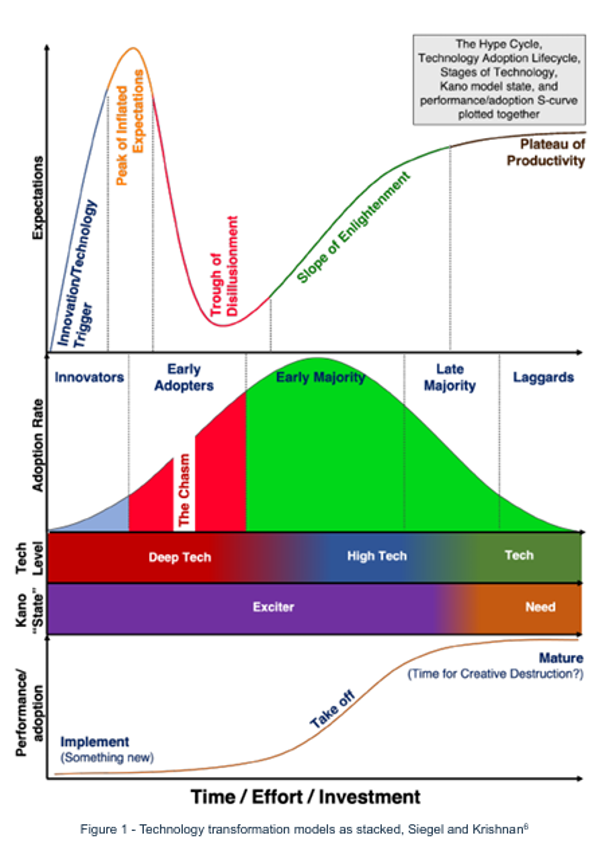
Kaya discusses deep tech through five dimensions: its roots in fundamental research, its technical complexity, its distance from market readiness, its frequently invisible role within other products and systems, and its potential contribution to major societal challenges. These characteristics help explain why standard IP recommendations require careful adaptation.
Consider a university spin-off developing a new sensing technology. The underlying research may support several applications, each involving different customers, partners and competitors. Early protection decisions can influence which of these opportunities remain commercially accessible. At the same time, the team needs to share enough information to secure investment and validate demand.
The management task is to connect protection choices with a developing understanding of customer value. Which technical capabilities support a benefit that customers will pay for? Where could competitors reproduce that benefit? Which knowledge must the venture control to retain a commercially relevant position? These questions give IP strategy its business direction.
Connecting Management Functions with the Venture Lifecycle
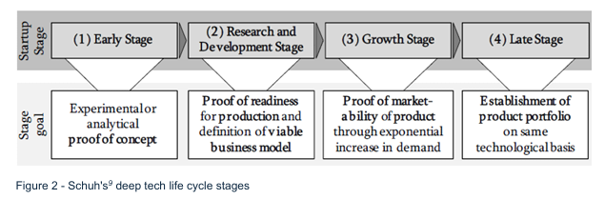
The organizing idea of Kaya’s thesis is a matrix combining six business functions with four development stages. The functions are strategy, decision-making, implementation, organization, leadership and business development. Legal strategy provides an additional perspective across the framework.
The lifecycle extends from the early stage through R&D to growth and the late stage. Each phase changes the circumstances in which IP decisions take place. An early research team may need to clarify ownership and coordinate publication. A venture preparing for production faces questions about partner access, manufacturing knowledge and freedom to operate. A mature business must assess whether its portfolio still supports its revenue model and future market position.
This structure makes the connections between management responsibilities more visible. A decision to protect manufacturing know-how through secrecy, for example, has consequences for employee responsibilities, information access and relationships with production partners. Its effectiveness depends on how the organization implements and maintains it.
The framework also reflects the interdisciplinary approach of the MIPLM programme. Technical understanding, legal expertise and business judgment need to inform the same decisions. Kaya’s contribution lies in organizing these intersections over time, helping readers identify the specific management problem behind a broader question about IP protection.
Early Protection Must Support Learning and Preserve Options
During the early and R&D stages, deep tech teams face a difficult allocation problem. They need to protect commercially relevant knowledge while preserving resources for experimentation. They may also have to make commitments before they know which application or business model will succeed.
Kaya examines Minimum Viable Intellectual Property as one approach to this situation. The emphasis is on establishing a workable foundation: clear ownership, deliberate management of confidential knowledge and protection expenditure linked to the venture’s emerging value proposition. This requires founders to understand what they control, what depends on university or partner rights, and what could become vulnerable through disclosure.
As development progresses, the thesis explores how IP activities can accompany technical milestones. Invention assessment, patent information and freedom-to-operate analysis become inputs into development decisions. Their timing matters because new findings can change the product architecture or reveal a need for external rights.
Uncertainty also shapes how managers evaluate these choices. Kaya discusses scenario planning and real-options thinking as ways to examine the value of maintaining flexibility. The ability to adapt, expand or abandon a development path can matter greatly when reliable forecasts are unavailable.
The thesis pays particular attention to commitment bias. Years of research and a strong belief in the technology can make it difficult to reconsider an earlier decision. Explicit review criteria and structured challenges to assumptions help teams assess the next investment on its future contribution.
Growth Changes What the Business Needs from IP
Commercial growth introduces a different set of pressures. The venture becomes more dependent on manufacturing capacity, distribution and cooperation with other organizations. Its IP strategy must support these relationships while maintaining control over the sources of its competitive advantage.
Kaya examines the difficulties of transferring complex knowledge between organizations. A patent or licence alone may leave substantial practical questions unresolved. Partners also need access to the knowledge required for implementation, with clear responsibilities for its use and protection. IP management therefore becomes closely connected to how the company organizes collaboration.
Growth also creates a need to reassess the portfolio. Rights acquired around an early technical concept may have limited relevance to the products that eventually reach the market. Other assets may become more valuable because they support a critical interface, a production capability or an emerging service offering. Portfolio review needs to follow these changes.
The thesis extends this reasoning to later business model development. Where a company introduces recurring services or data-based offerings around its technology, the commercially relevant knowledge and relationships may shift. Protection priorities must evolve accordingly.
Organizational capability matters throughout this transition. Kaya considers the balance between internal strategic responsibility and external specialist support, alongside leadership practices that encourage researchers to contribute to commercially meaningful IP. The value of these contributions depends on their connection to the business.
A Framework for Better Questions and Further Research
Kaya presents his work as a foundation for further investigation. The thesis maps a broad range of potential challenges and discusses plausible responses, while recognizing that their suitability depends on the circumstances of each venture.
This qualification is central to its practical use. Deep tech encompasses very different development pathways. Quantum technologies, biotechnology and advanced manufacturing may share long horizons and technical uncertainty, yet their commercialization conditions differ substantially. Applying the framework to individual sectors and testing it against company experience are therefore promising next steps.
For founders and IP managers, the framework offers a structured basis for discussion: What has changed in the venture’s development? Which IP assumptions need review? Who owns the resulting decision? How will its consequences affect other business functions?
For the MIPLM community, the thesis illustrates how the programme’s management perspective can organize a complex field of practice. It connects IP choices to the development of the company, making their timing, purpose and organizational consequences easier to examine.
Explore Alihan Kaya’s thesis defence presentation below for an overview of the framework, selected management challenges and directions for further research.