
When integration changes where control sits 🎯IP Management Pulse #69

Subscribe for compact, in-depth IP intelligence: current developments, expert perspectives and practical insights into IP management in the context of technology, business models, innovation and R&D.
You can find previous issues in the 🎯IP Management Pulse archive and subscribe to receive a new edition every second Thursday.
The next newsletter will cover the following topics:
When Robotics Platforms Become Part of a Larger Physical AI Ecosystem
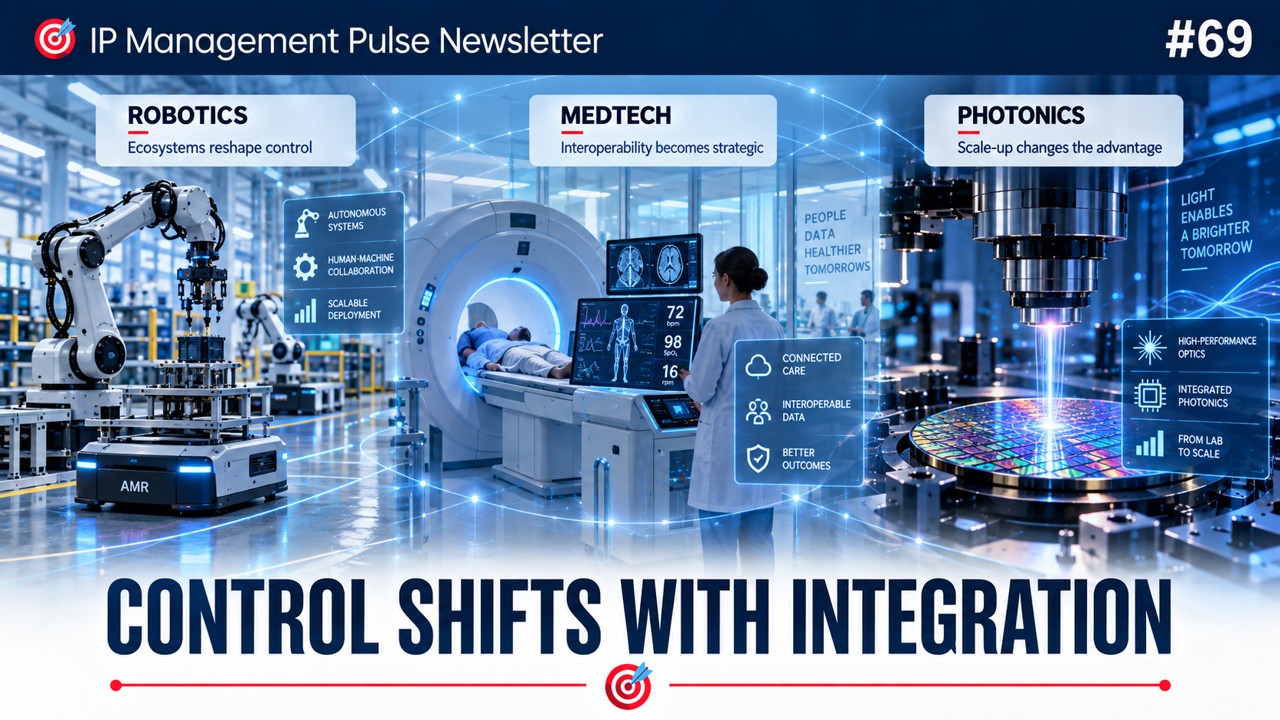
David Reger recently announced that NEURA Robotics is acquiring Bosch Rexroth’s ACTIVE Shuttle and integrating the proven mobile robot into its wider Physical AI ecosystem. The development raises an important IP-management question: when established hardware becomes part of a shared intelligence and infrastructure layer, competitive control may increasingly depend on software, interfaces, data, know-how and improvement rights rather than on the machine alone.
Interoperability Is Moving Into the MedTech Boardroom
Rachel Dunscombe argues that healthcare interoperability is no longer simply an IT or compliance issue. Connected devices, remote care, AI and new models of healthcare delivery increasingly depend on the ability to exchange and use data across systems. For MedTech companies, this creates a strategic tension: interoperability requires openness, while differentiation still depends on identifying which technology, data, workflow and know-how layers should remain proprietary.
Photonics Scale-Up Changes Where the Advantage Sits
Johan Feenstra recently highlighted SMART Photonics’ move toward 6-inch, high-volume wafer production as demand for photonic chips grows in AI infrastructure and next-generation communications. As photonics moves from development toward industrial scale, competitive advantage can expand beyond device architecture into fabrication processes, yield optimisation, packaging, testing and accumulated manufacturing know-how.
Building an IP Strategy for Robotics Innovation
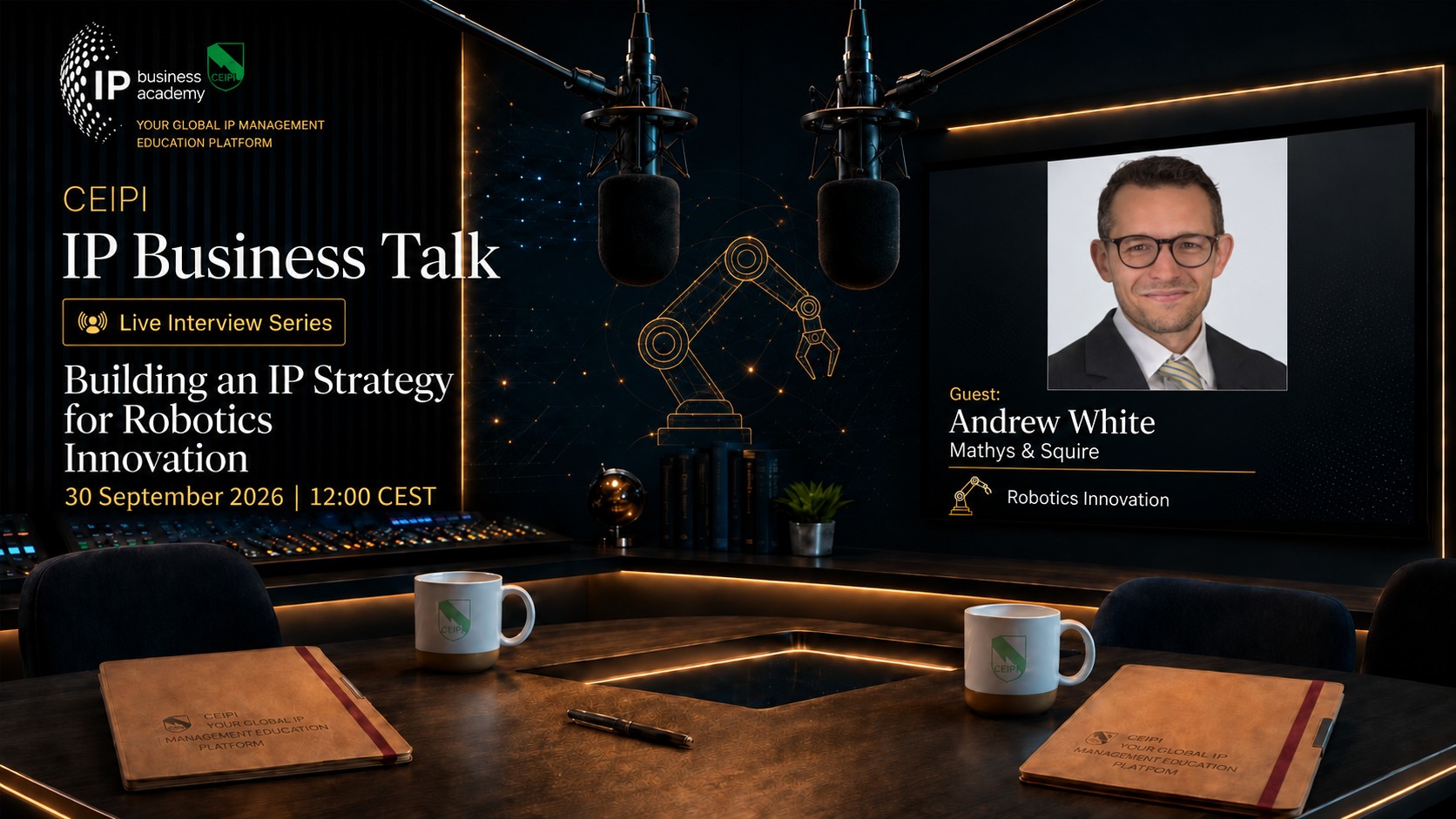
Robotic systems combine mechanics, sensors, electronics, software and AI, making it difficult to identify where the commercially relevant invention actually lies. An upcoming CEIPI IP Business Talk with Andrew White explores how robotics companies can connect patentability and invention identification with ownership, freedom to operate, licensing, external dependencies and the product roadmap.
👉 Building an IP Strategy for Robotics Innovation
From GreenTech Invention to Investable Growth
Andrew Cockerell’s analysis of GreenTech patent activity raises a particularly relevant question for smaller innovators: how can they realise the value of their inventions, attract investment and build productive commercial partnerships? A new IP Business Academy article takes this question further and examines how IP strategy can connect technical advantage with adoption, investment readiness, partnerships and the ability to retain value during scale-up.
IP in Business Ecosystems
Companies increasingly create value through networks of suppliers, platforms, software, data, standards and technology partners that they do not fully control. Our latest dIPlex Deep Dive looks beyond IP ownership to ask where negotiation power, dependencies and control actually sit inside such ecosystems — and why interfaces can become strategically important IP positions.
👉 Deep Dive: IP in Business Ecosystems
Strategic Visibility for IP Professionals Who Prefer Depth Over Exposure
Many IP professionals associate visibility with constant posting or personal exposure. Giulia Donato proposes a different approach: strategic visibility is about helping the right people understand where an expert’s perspective creates particular value. For professionals who prefer depth over frequency, selective and consistent communication can create stronger recognition than simply producing more content.

Scaling Proprietary Technology Without Scaling Away the Advantage
When proprietary technology moves from demonstration projects into repeated industrial deployment, partners need documentation, operating parameters, engineering support and know-how. Our latest IP Management Learning examines how companies can structure this transfer so that partners can succeed while project experience, improvements and critical capabilities continue to strengthen the technology owner’s position across future deployments.
👉 How IP Management Shapes the Next Stage of Growth