What makes technical expertise commercially usable?🎯 IP Management Pulse #73

Subscribe for compact, in-depth IP intelligence: trends, cases and research curated by the team of the IP Business Academy and the IPBA Connect Platform. Get practical insights into current developments in IP management and learn from leading experts in the context of business models, innovation and R&D.
Explore previous editions in the newsletter archive and subscribe to 🎯 IP Management Pulse for a fresh read every two weeks.
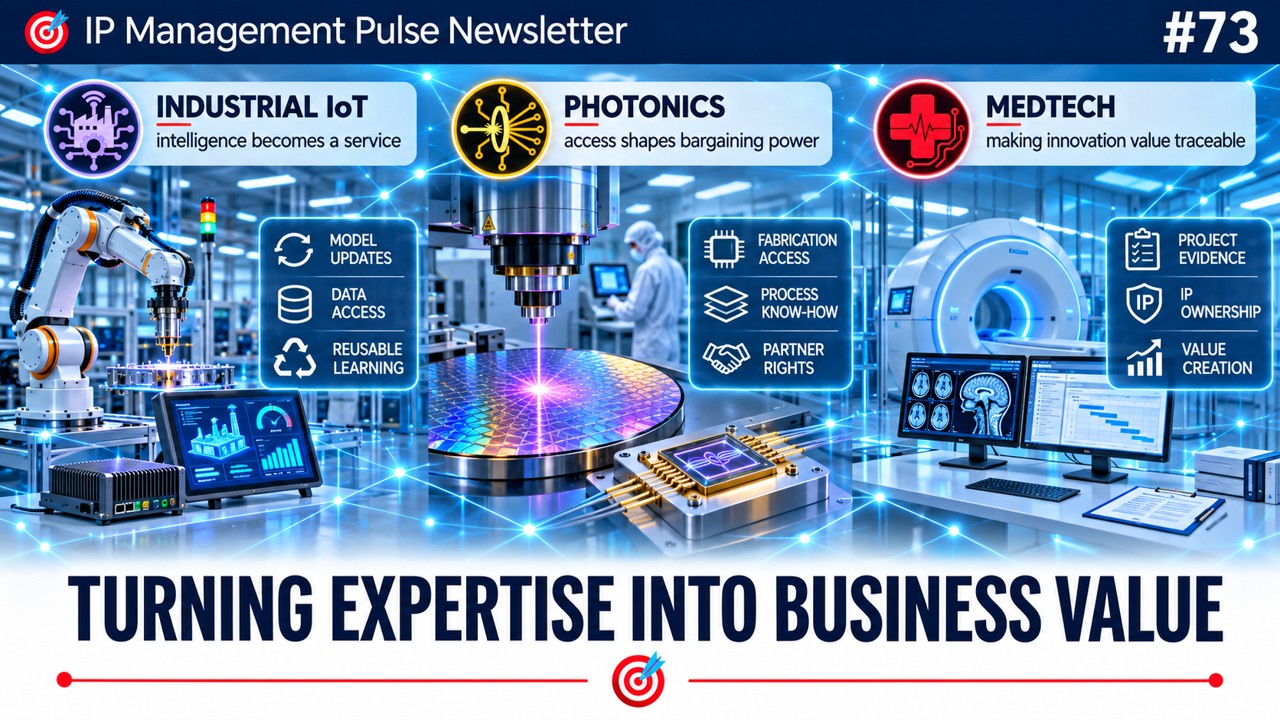
The next newsletter will cover the following topics:
Managing Intelligence Across Industrial IoT Deployments
Matt Hatton examines how AI changes the operation of connected devices, from processing information locally to maintaining models and managing feedback over time. For industrial suppliers, the service depends on continuing access to software, data and the knowledge needed to improve performance. The newsletter explores the corresponding IP-management questions: who may update models, how learning from customer installations can be reused, and which third-party conditions affect the supplier’s ability to maintain its offering.
Photonics Bottlenecks Change Who Sets the Terms
Jose Pozo highlights how capacity constraints across the photonics supply chain influence bargaining power. Access to fabrication, packaging and enabling components can become decisive even when a company owns a differentiated optical design. We examine why manufacturing access, process know-how, improvement rights and the ability to qualify alternative suppliers belong in the same strategic discussion. The issue also recommends a practical dIPlex contribution on managing knowledge across partner relationships and supplier changes.
What Public Funding Reports Reveal About MedTech Value
Nicolas Schneider compares the public information available about medical-imaging projects involving Guerbet and Gleamer. He asks how far an outside reader can trace the economic commitments made at funding selection through to subsequent results. Missing public evidence, he stresses, does not establish that monitoring was absent or commitments went unfulfilled. The newsletter develops an IP-management perspective on documenting contributions, ownership and exploitation rights within innovation partnerships, supported by further reading on IP audits.
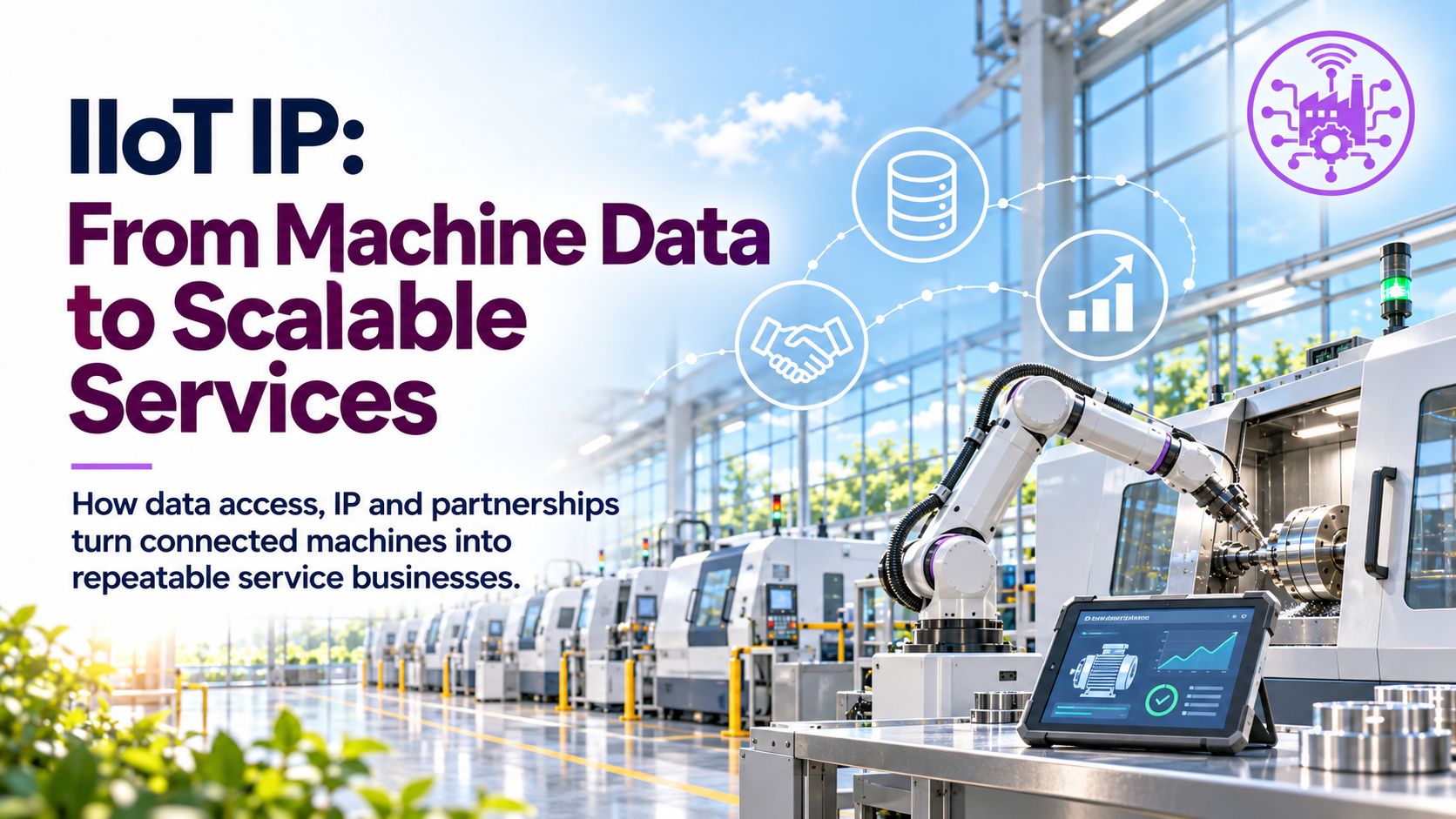
From Machine Data to Scalable Industrial Services
Data access becomes commercially useful when it supports a service that can be delivered, maintained and developed across customers. This IP Business Academy article connects Julia Kaufmann’s contribution to Osborne Clarke’s Data Act series with perspectives from the Industrial IoT ecosystem. It examines the arrangements needed to combine operating information, technical expertise and partner capabilities while preserving the supplier’s ability to reuse knowledge and develop its business.
From Intangible Value to Accessible Capital
A company’s IP may support its competitive advantage while remaining difficult for a lender to assess. Our EU Innovation Act Monitor contribution explores the journey from recognising intangible value to preparing information that can support a financing decision. Drawing on Andrea Di Carlo and other voices from the IP-finance ecosystem, it connects valuation capabilities, ownership evidence, institutional cooperation and business preparation with the proposed European Innovation Act’s ambitions.

Understanding What an IP Valuation Can Tell You
The recommended dIPlex Deep Dive on IP Valuation Concepts and Approaches introduces different concepts of value and explains cost, market and income approaches. It helps readers understand why valuation purpose, commercial context, legal protection and complementary assets influence an assessment. The connection with IP-backed finance is practical: a valuation needs appropriate evidence and assumptions, and remains one input to a lender’s decision.
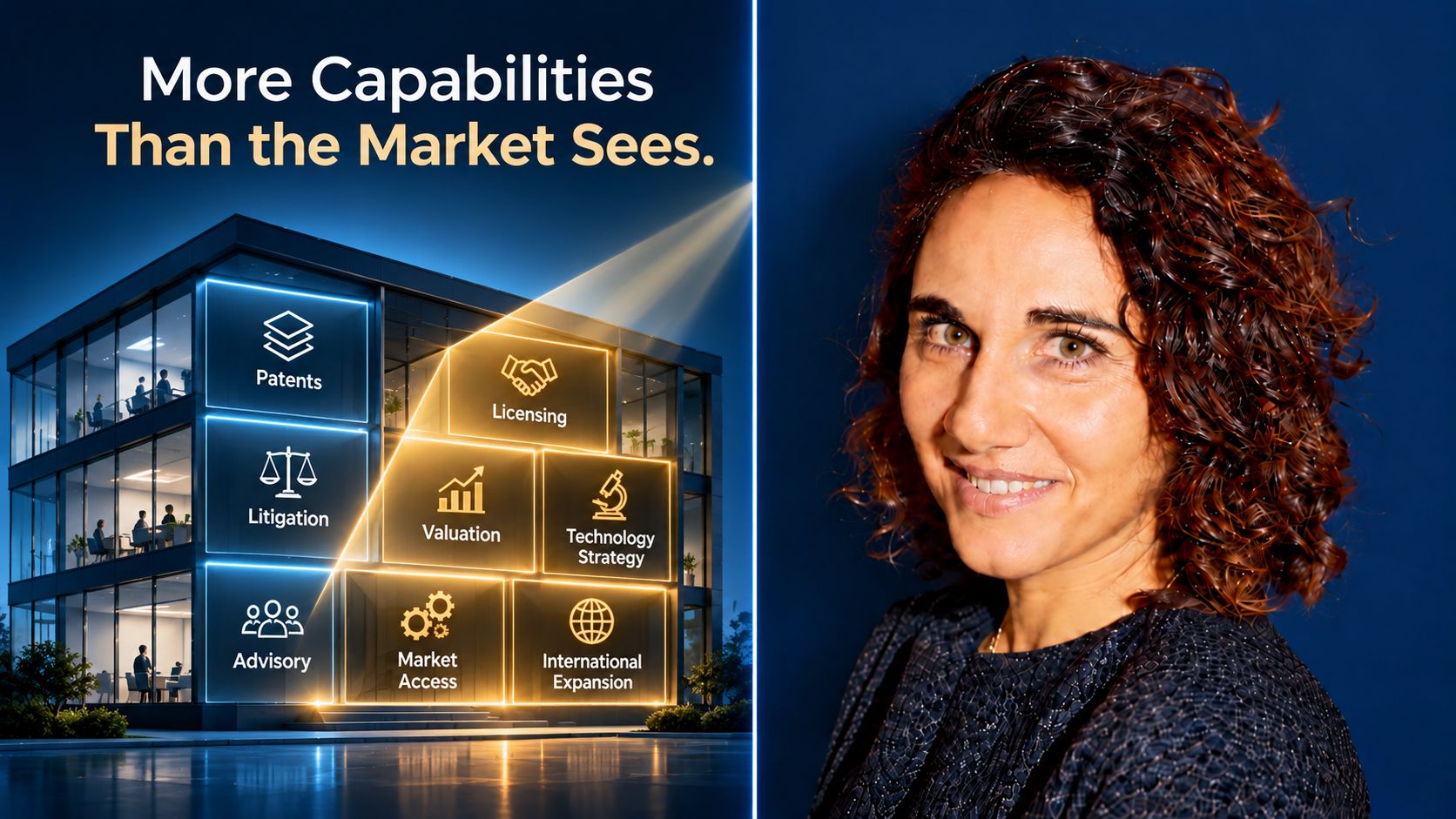
Making the Most of a Firm’s Collective Expertise
In her latest Visible Council column, Giulia Donato asks whether an IP firm’s market reputation reflects the capabilities it has developed. She explores how complementary expertise can create differentiation around clients’ business challenges, and how individual professionals’ positioning can support the firm’s growth ambitions. Her starting point connects the business the firm wants to attract, its collective strengths and what clients currently recognise it for.
Avoiding Trade Secret Infringement Risks
In Part 2 of our interview with Dr. Axel Oldekop, the focus turns to companies accused of using someone else’s confidential information. The discussion addresses recruitment, onboarding, offboarding and the records that help reconstruct how a technical solution was developed. The management lesson is to make information provenance part of everyday R&D and people processes, with clear expectations about material from former employers and a route for assessing uncertainty.